
What the Shift Toward Spatial Computing Actually Means for Ordinary People

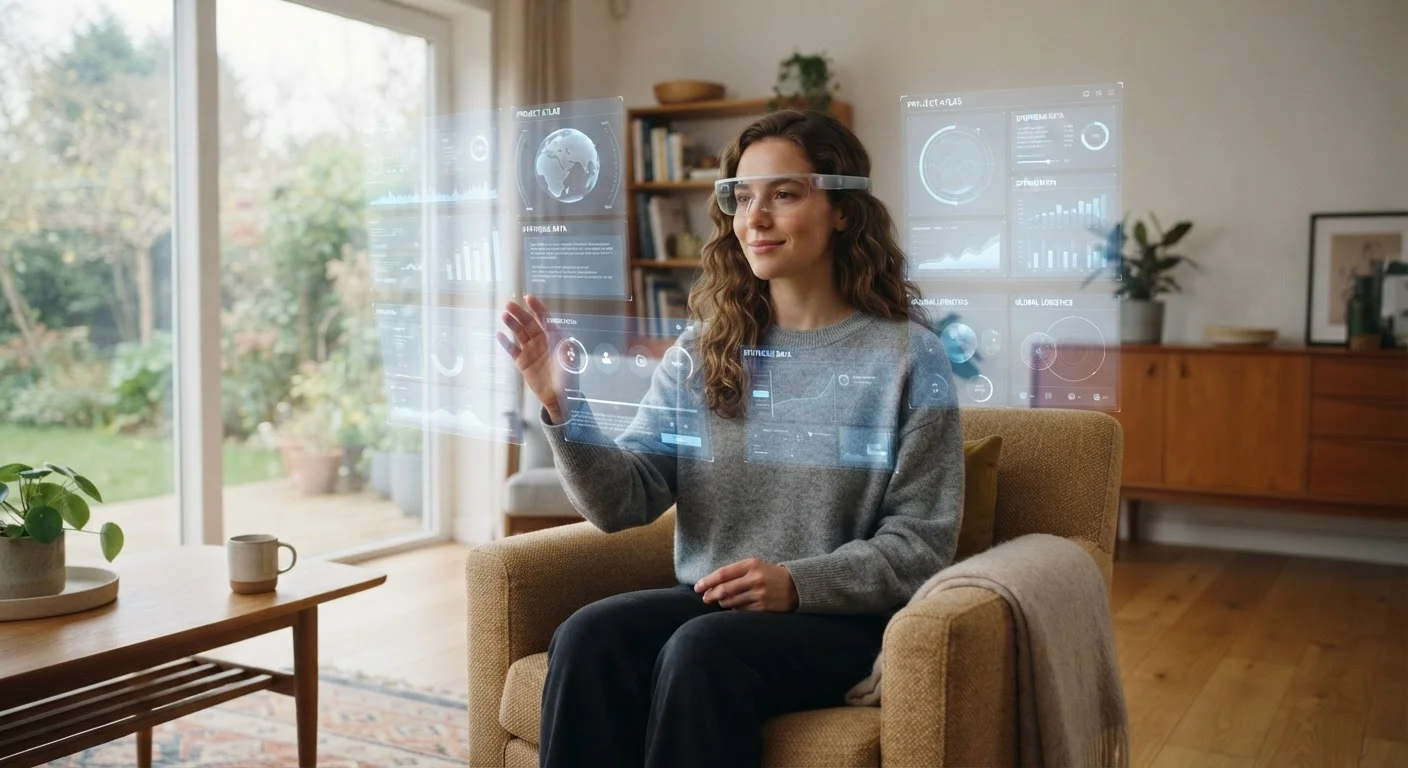
Photo: faqsvault.com editorial
Key Takeaways
- Spatial computing layers digital content onto the physical world rather than confining it to flat screens.
- The technology is already present in everyday apps like navigation overlays and furniture placement tools.
- Mass adoption depends on hardware becoming smaller, cheaper, and more comfortable to wear.
- Privacy considerations are significant, since spatial systems must sense and map physical environments.
- The shift is gradual — not an overnight revolution, but a slow reorientation of how we interact with information.
Why 'Spatial Computing' Is More Than a Buzzword
Every few years, a phrase escapes the tech industry and starts appearing in mainstream headlines. "Spatial computing" is the current candidate. It sounds abstract — and tech marketing hasn't helped clarify it — but the underlying shift it describes is real and worth understanding on your own terms.
At its core, spatial computing is about moving information off flat screens and into the space around you. Your phone, monitor, or TV presents content on a two-dimensional surface. Spatial computing systems understand three-dimensional environments and can anchor digital content to physical locations — so a notification might appear floating near your front door, or assembly instructions might hover directly over the furniture you're building.
The reason this matters now is hardware. Sensors, processors, and display technology have all crossed thresholds that make spatially aware devices smaller and more practical than they were even five years ago. That doesn't mean the technology is ready for everyone — it isn't — but the trajectory is meaningful enough to pay attention to. For context on how quietly transformative tech shifts tend to unfold, the patterns from the last decade of tech are instructive.
Where You're Already Encountering It
Spatial computing isn't waiting for some future headset to arrive. Elements of it are woven into tools many people use today, often without recognizing the label.
- AR navigation: When a maps app displays a live camera view with directional arrows overlaid on the street in front of you, that's spatial computing in action.
- Furniture and décor apps: Several retail apps let you point your phone at a room and place a virtual sofa or lamp to see how it looks — the app is mapping your space and anchoring digital objects to it.
- Filters and face tracking: Video call backgrounds that precisely follow the contours of your face, or social media filters that attach virtual objects to real ones, use spatial tracking algorithms.
- Industrial and medical use: Surgeons use AR overlays during procedures; technicians use spatial guides for complex equipment repair. These professional applications are further along than consumer ones.
These examples are modest compared to what spatial computing advocates describe as its full potential, but they demonstrate that the technology is already embedded in everyday life — it's the scale and sophistication that are set to grow.
$620B+
Projected global AR/VR market value by 2032
Various market research analysts estimate the combined augmented and virtual reality market could exceed this figure, though projections vary and carry significant uncertainty.
1 in 3
U.S. adults who have used an AR feature on a smartphone
Surveys by technology research organizations suggest AR interactions via phone — including camera filters and navigation overlays — are already common among U.S. adults.
5–7 years
Estimated timeline for mainstream wearable AR adoption
Industry analysts commonly cite a multi-year runway before lightweight, affordable AR glasses reach broad consumer adoption, though forecasts in emerging tech categories are inherently uncertain.
The Real Barriers Between Here and There
Media coverage of spatial computing often skips past the genuine obstacles. Understanding them gives a more honest picture of what's realistic in the near term.
Hardware Comfort and Cost
Current headsets capable of rich mixed-reality experiences are bulky, expensive, and tiring to wear for extended periods. Consumer adoption historically follows when devices become small enough to wear unselfconsciously and affordable enough to be an ordinary purchase — neither condition is yet widely met.
Battery and Processing Demands
Running real-time spatial mapping, rendering three-dimensional content, and tracking your position simultaneously is computationally intensive. This is partly why edge computing is becoming an important supporting technology — offloading some processing to nearby infrastructure rather than the device itself can reduce power demands.
Privacy and Data Sensitivity
Spatial systems must sense your environment to function. A device that maps your home in detail, tracks your gaze, and logs your movements generates an unusually intimate data profile. Regulatory frameworks for this category of data are still developing, and consumers are right to ask pointed questions about how that information is handled before adopting new devices.
What It Could Realistically Change — and What It Won't
Calibrated expectations are more useful than either dismissal or uncritical enthusiasm. Here's a grounded read on where spatial computing could have genuine impact for ordinary people.
Likely near-term changes
Smartphone apps will increasingly use spatial features — room scanning, object recognition, and overlaid information — without requiring additional hardware. Workplace tools for training, remote assistance, and navigation in complex environments (warehouses, hospitals, construction sites) are advancing faster than consumer applications.
Medium-term possibilities
If headset hardware follows the cost and comfort trajectory of other consumer electronics, some portion of the computing we currently do on phones and laptops may migrate to wearable devices that layer information over the world rather than demanding we look away from it. This is plausible but not certain, and depends on factors beyond pure technology — cultural adoption, design breakthroughs, and regulatory clarity all play roles.
What it's unlikely to replace
Flat screens aren't disappearing. Many tasks — reading long text, detailed creative work, focused data analysis — are well suited to traditional displays. Spatial computing is more likely to complement existing interfaces than to wholesale replace them, at least within the foreseeable future.
As with any major tech shift, the gap between a technology's potential and its actual daily relevance takes time to close. Separating signal from hype is a useful habit to develop when following how this space evolves.
Frequently Asked Questions
All published content on this website is for informational and educational purposes only and should not be taken as professional advice. We recommend that readers seek expert opinion before making any decisions. The website is not responsible for any actions taken based on the information provided on this website. We are not liable for any inaccuracies, modifications, or omissions in information. Moreover, external links or third-party content are provided for convenience; we are not liable for their correctness. Users are advised to verify every piece of information before they use it for any purpose.