
The Quiet Rise of Edge Computing and Why It Matters

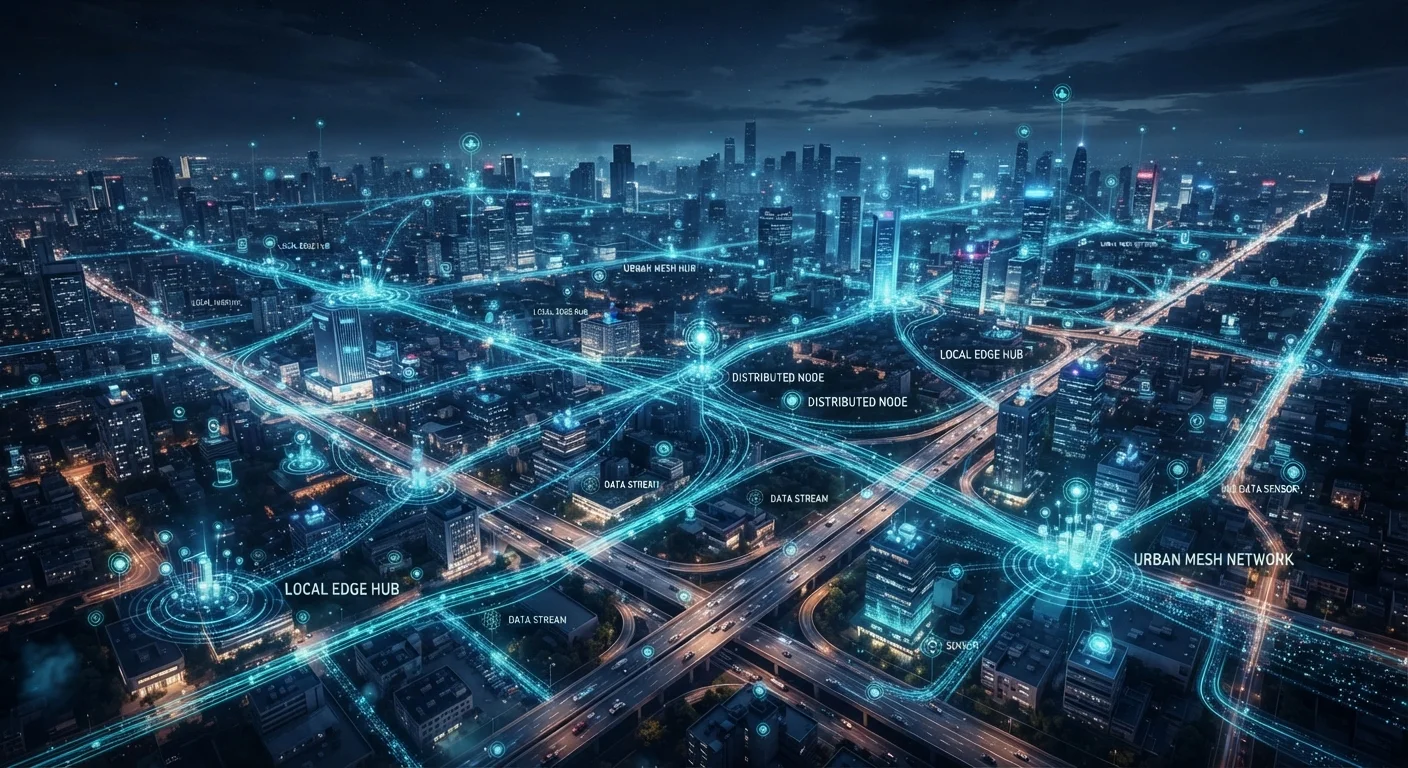
Photo: faqsvault.com editorial
Key Takeaways
- Edge computing processes data near its source rather than routing it to a central cloud server.
- Lower latency from edge computing enables faster responses in applications like autonomous vehicles and industrial sensors.
- The technology reduces bandwidth costs and improves privacy by keeping more data local.
- Smart home devices, healthcare monitors, and factory automation all already rely on edge computing principles.
- Edge and cloud computing work together — they're complementary, not competing approaches.
Why "Edge" Computing Has a Name at All
For most of the internet's history, the dominant model was simple: devices collect data, ship it to a central server, and wait for a response. This works fine when you're loading a webpage or syncing a calendar. But as technology has pushed into factories, hospitals, vehicles, and countless everyday objects, waiting on a round trip to the cloud has started to cause real problems.
The term edge refers to the outer boundary of a network — the point where devices and sensors actually interact with the world. Edge computing moves the processing power to that boundary, reducing or eliminating the need to send data back and forth to a distant data center. The result is faster responses, less network congestion, and systems that can keep functioning even when connectivity drops.
This shift didn't happen in a single announcement or product launch. It's been building steadily for years, driven by the explosion in connected devices and the practical limits of centralized infrastructure. If you want to make sense of broader tech trends, knowing how to separate signal from noise in tech news is a skill worth developing — edge computing is a genuine signal.
How It Actually Works
At its core, edge computing means placing computational resources — processors, memory, software — closer to the data source. Those resources can live inside a smartphone chip, inside a camera at a warehouse entrance, or in a small server installed at a cell tower. The key is that processing happens locally, before any data needs to travel far.
Consider a modern smart security camera. An older model might stream video footage continuously to a cloud server, which then analyzes it for motion or faces. An edge-enabled camera does that analysis on the device itself, only flagging and transmitting relevant clips. This reduces bandwidth use, speeds up alerts, and means the camera can still detect motion even if the internet goes down.
75%
Of enterprise data processed at the edge by 2025
Gartner has projected that the proportion of enterprise data generated and processed outside centralized data centers will grow dramatically through the mid-2020s.
$232B+
Global edge computing market projection
Industry analysts at IDC have forecast the global edge computing market to reach over $232 billion by 2026, reflecting strong investment across sectors.
<10ms
Target latency for edge-enabled applications
Applications like autonomous vehicles and real-time industrial control typically require response times under 10 milliseconds — a threshold only edge processing can reliably meet.
Edge computing doesn't replace the cloud — it works alongside it. Time-sensitive decisions happen at the edge; long-term storage, large-scale analysis, and software updates flow through cloud infrastructure. The relationship is layered and cooperative rather than competitive.
Where You Already Encounter It
Edge computing is less of a future concept than many assume — it's already embedded in systems people interact with daily:
- Smartphones: Modern phones process voice commands, facial recognition, and photo enhancements on-device using dedicated chips, rather than sending that data to the cloud.
- Autonomous vehicles: Self-driving systems must make split-second decisions. Processing sensor data locally — rather than waiting on a distant server — is a safety requirement, not just a convenience.
- Healthcare wearables: Devices monitoring heart rhythms or blood oxygen levels increasingly process data on the device itself, enabling faster alerts without constant connectivity.
- Industrial automation: Factory machinery uses edge nodes to detect equipment faults in real time, reducing downtime without relying on network availability.
The pattern is consistent: whenever a task is too time-critical or data-intensive to tolerate cloud latency, edge computing becomes the practical solution. As connected devices multiply, so does the range of situations where this matters. This connects closely to the broader concept of ambient computing, where technology increasingly operates invisibly in the background of everyday life.
Privacy and Security Considerations
One underappreciated benefit of edge computing is its potential to improve privacy. When a device processes data locally and only transmits a summary or alert — rather than raw audio, video, or biometric data — less sensitive information travels across networks. That reduces the number of opportunities for interception or misuse.
However, the picture isn't entirely straightforward. Edge devices themselves can be physically accessed, misconfigured, or compromised if not properly secured. Distributing compute across thousands of nodes also distributes the security challenge. A vulnerability in one type of edge device could, in theory, be exploited at scale.
For everyday users, the relevant takeaway is that edge architecture can support stronger privacy, but outcomes depend on how products are built and managed. It's worth staying informed about how the devices in your home or workplace handle data. Our article on privacy in the age of persistent connectivity explores these considerations in more depth.
What It Means for the Broader Tech Landscape
Edge computing is enabling a category of applications that simply weren't viable before. Real-time language translation, augmented reality overlays, industrial robotics, and precision agriculture sensors all depend on the kind of low-latency, high-reliability processing that edge infrastructure provides. This intersects with the emergence of spatial computing, which layers digital content onto physical environments — a technology that similarly demands near-instant processing at the point of experience.
The rollout of 5G networks has accelerated edge computing's expansion. Faster wireless speeds combined with edge nodes installed at cell towers create what's sometimes called multi-access edge computing (MEC) — processing power distributed across the cellular network itself, reducing latency to milliseconds.
“The edge is not just about proximity — it's about enabling a new class of applications that require real-time intelligence where latency and reliability matter most.”
— Mahadev Satyanarayanan, Professor of Computer Science at Carnegie Mellon University, widely cited researcher in edge and mobile computing
For ordinary readers, the clearest signal is this: the devices and systems around you are becoming more capable of independent action. That shift — from passive tools that relay information to active systems that make decisions locally — is what edge computing fundamentally represents. It's not just a technical architecture. It's a change in how intelligence is distributed through the technology we depend on every day.
Frequently Asked Questions
All published content on this website is for informational and educational purposes only and should not be taken as professional advice. We recommend that readers seek expert opinion before making any decisions. The website is not responsible for any actions taken based on the information provided on this website. We are not liable for any inaccuracies, modifications, or omissions in information. Moreover, external links or third-party content are provided for convenience; we are not liable for their correctness. Users are advised to verify every piece of information before they use it for any purpose.