
Wired vs. Wireless Charging: Which Is Actually Better for Your Phone?

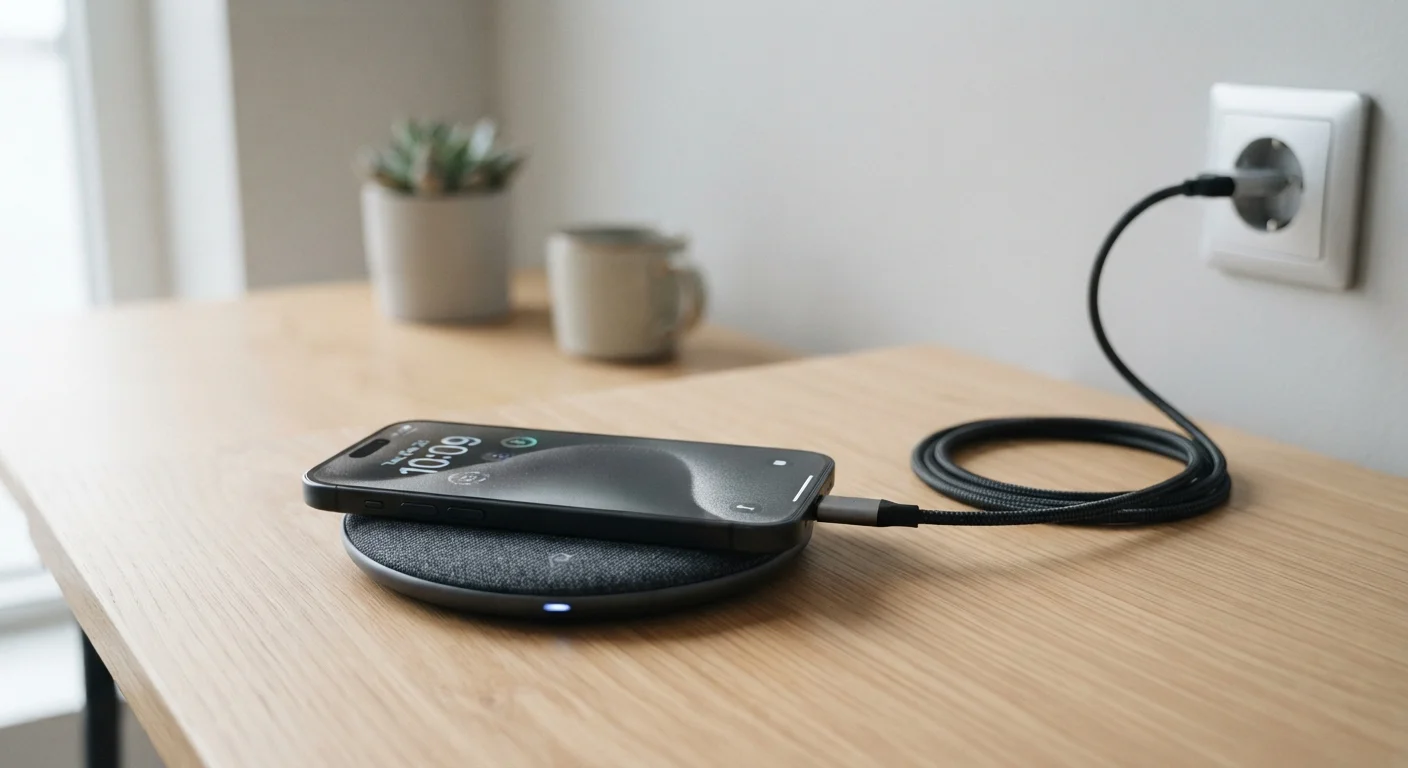
Photo: faqsvault.com editorial
Key Takeaways
- Wired charging is generally faster than wireless charging, especially for phones with fast-charge support.
- Wireless charging produces more heat, which over time may contribute to gradual battery wear.
- Wireless charging requires your phone to stay nearly motionless on the pad, limiting usability while charging.
- Both methods are safe for everyday use; neither will damage your phone in normal circumstances.
- Wireless charging has improved significantly and now rivals wired speeds on some newer devices.
- Your best choice depends on your daily routine, how quickly you need power, and where you charge most often.
Speed: The Gap Is Real, But Narrowing
Charging speed is usually the first question people ask — and on this front, wired charging holds a clear advantage in most everyday situations. A standard wired charger can deliver power significantly faster than a basic wireless pad, and phones with fast-charging support widen that gap further. To understand what those speed claims really mean, it's worth reading up on how fast charging actually works.
Wireless charging, which works through a process called electromagnetic induction, has improved considerably. Newer flagship phones and compatible chargers can reach speeds that rival mid-range wired options. However, wireless charging loses some energy as heat during transmission, which is why it typically delivers fewer watts of actual charging power to your battery compared to what a wired connection provides at the same rated wattage.
For most people, the practical difference is 20–40 minutes of extra charging time for a full cycle via wireless. That's negligible overnight, but meaningful when you have 15 minutes before walking out the door.
| Criterion | Wired Charging | Wireless Charging |
|---|---|---|
| Typical charging speed | Faster; supports high wattage | Moderate; improving on newer devices |
| Heat generated | Less at comparable speeds | More due to induction energy loss |
| Ease of use | Requires plugging in each time | Drop-and-charge simplicity |
| Usability while charging | Full use; cable allows movement | Limited; must stay on pad |
| Port/connector wear | Yes, over repeated cycles | None; no physical connection |
| Compatibility | Universal across smartphones | Requires Qi-compatible device |
| Setup cost | Low; cables are inexpensive | Moderate; pads vary in quality |
Battery Health: Heat Is the Real Concern
Lithium-ion batteries — the type in virtually every modern smartphone — degrade gradually over hundreds of charge cycles. One of the key factors that accelerates that process is heat. This is where wired and wireless charging differ in a less obvious but important way.
Wireless charging generates more ambient heat than wired charging during a session, partly because of energy lost in the induction transfer process. Extended exposure to heat, particularly when a phone is enclosed in a case while on a pad, can add up over time. This doesn't mean wireless charging will ruin your battery quickly — it won't — but it's a factor worth knowing if you're aiming to keep a phone for several years.
Wired fast charging also generates heat, particularly at high wattages. Many phone manufacturers now include intelligent thermal management that automatically reduces charging speed when the device gets too warm, regardless of which method you're using. Charging in a cool environment and removing thick cases while charging are simple habits that help both methods.
Convenience and Everyday Practicality
Convenience is where wireless charging earns its place in many people's routines. There's no port to locate, no cable to untangle, and no wear on your phone's charging connector from repeated plugging and unplugging. For a nightstand or desk setup, a pad offers a genuinely simpler experience.
The limitation is alignment. Wireless charging requires your phone to sit in a fairly specific position on the pad to maintain a consistent charge. Move the phone even slightly — to glance at a notification, for example — and it may stop charging without an obvious alert. Wired charging doesn't have this problem; the phone charges regardless of how you hold or position it.
Wireless pads also vary widely in quality. A poorly made or mismatched pad may charge slower than expected or generate excessive heat. The Qi standard (pronounced "chee") is the most widely adopted protocol and is supported by most Android phones and iPhones. Higher-tier proprietary standards from manufacturers can charge even faster but typically require brand-specific accessories.
For a broader look at how wireless technology is evolving beyond just charging, the current state of wireless technology covers where the field is headed.
Which Method Fits Your Life?
There's no universally correct answer — the better method depends on how and where you charge most often. Many people end up using both: a cable at their desk or in the car when they need speed, and a wireless pad at the bedside for overnight top-ups.
If you're someone who frequently needs fast partial charges throughout the day, wired is the more practical primary method. If your phone mostly charges while you sleep or sits on a desk while you work, wireless is a perfectly capable choice that adds genuine convenience.
It's also worth noting that compatibility matters. Not all phones support wireless charging — it requires specific hardware inside the device. Check your phone's specs before investing in a wireless pad. And if you're comparing other everyday gadget decisions, the same logic of matching features to habits applies — much like choosing between Bluetooth speakers and portable radios based on how you actually listen.
Ultimately, both methods are reliable, safe, and widely supported. Understanding the trade-offs simply helps you get more out of whichever setup you choose.
All published content on this website is for informational and educational purposes only and should not be taken as professional advice. We recommend that readers seek expert opinion before making any decisions. The website is not responsible for any actions taken based on the information provided on this website. We are not liable for any inaccuracies, modifications, or omissions in information. Moreover, external links or third-party content are provided for convenience; we are not liable for their correctness. Users are advised to verify every piece of information before they use it for any purpose.