
Getting the Most Out of a Portable Power Bank

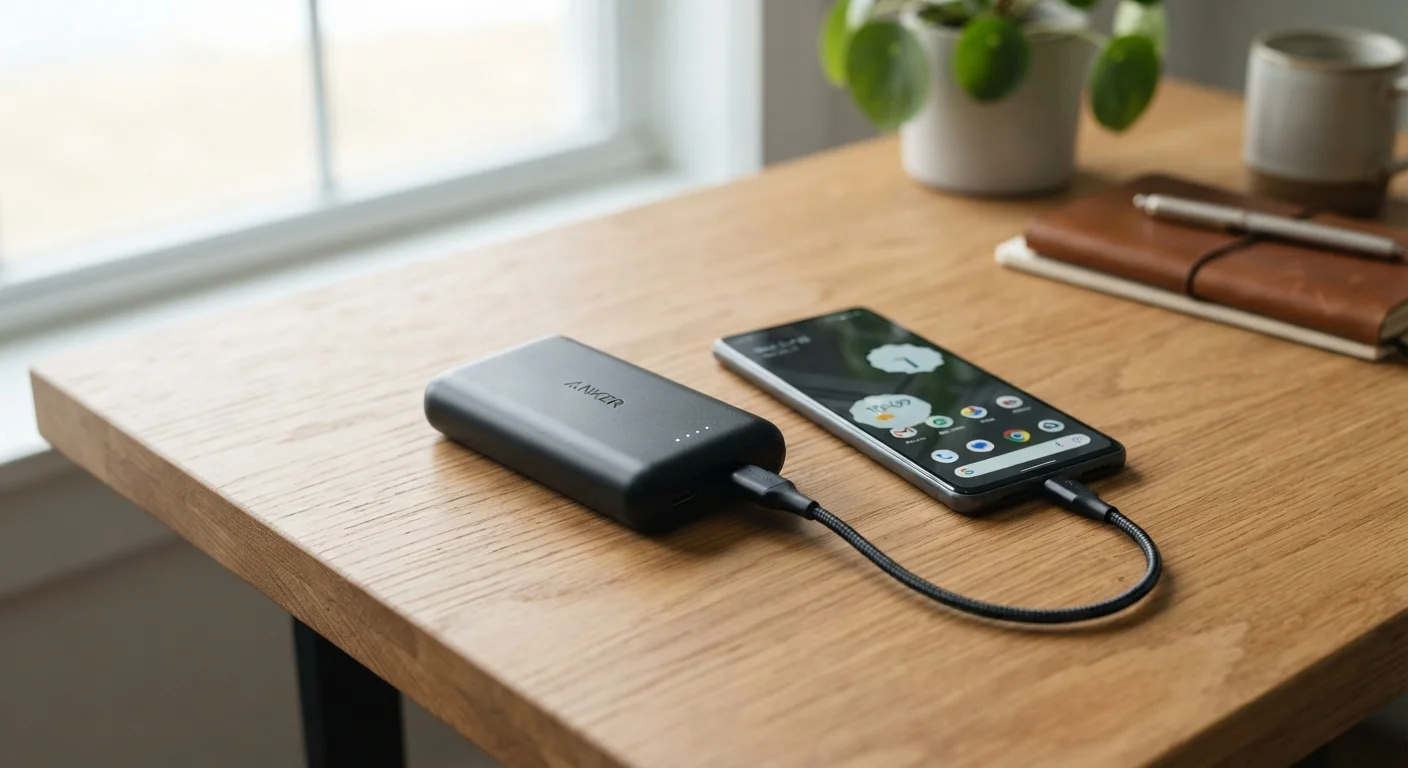
Photo: faqsvault.com editorial
Key Takeaways
- Charging habits directly affect how long a power bank's battery remains healthy over time.
- Capacity ratings in mAh don't translate 1-to-1 to actual device charges due to energy conversion losses.
- Keeping a power bank in extreme heat or cold significantly shortens its usable lifespan.
- Using the correct cable and charger speeds up charging and protects internal components.
- A power bank with pass-through charging lets you charge both it and a device simultaneously.
Why Charging Habits Make or Break Battery Longevity
A portable power bank is only as useful as the charge it can reliably hold. And that reliability is largely determined by how you treat it between uses — not just by the spec sheet when you bought it.
Most power banks use lithium-ion battery cells, the same chemistry found in smartphones and laptops. These cells respond well to moderate, consistent use and poorly to extremes. Letting a power bank drain to zero repeatedly, or leaving it plugged in at 100% for days, gradually erodes capacity in ways that are invisible at first but compound over time.
Understanding this dynamic doesn't require any technical knowledge. It just requires a few simple habit changes that protect your investment and keep the unit performing reliably for years.
Pass-Through Charging Saves Time
Capacity Ratings: What the Numbers Really Mean
Power bank packaging prominently displays a milliampere-hour (mAh) rating — 10,000 mAh, 20,000 mAh, and so on. Many buyers assume this translates directly into a set number of full phone charges. In practice, it's more nuanced.
What mAh Actually Means for You
When sizing a power bank for your needs, think about how many charge cycles you typically go through in a day away from an outlet, and factor in that each cycle draws on less than the full rated capacity. For most people, a 10,000 mAh unit comfortably covers one to two full smartphone charges — which is all most daily commuters or travelers ever need. If you're planning extended off-grid time, upgrading to a higher capacity is worth the added bulk. To better understand what charging speeds mean for your specific device, see our guide to fast charging claims.
Best Practices for Getting the Most From Your Power Bank
The practices below apply to the vast majority of consumer power banks on the market. Following them won't require any special equipment — just consistent attention to a few straightforward habits.
Charge your power bank before it drops below 20% remaining capacity.
Avoid leaving a power bank plugged in and fully charged for extended periods.
Store power banks at around 50% charge if you won't use them for several weeks.
Keep the power bank away from direct sunlight, hot cars, and freezing temperatures.
Use a charging cable and wall adapter that match the power bank's rated input wattage.
Match your power bank capacity to your realistic daily use rather than buying the largest available.
If you ever notice your power bank failing to hold a charge, getting unusually warm during use, or no longer charging connected devices reliably, it may be worth running through a basic device troubleshooting checklist before assuming it needs to be replaced. A structured troubleshooting checklist can help identify whether the issue is the cable, the charger, or the unit itself.
Quick Actions You Can Take Today
You don't need to overhaul your entire routine to see a meaningful improvement in how your power bank performs. A few targeted adjustments make the biggest difference right away.
Portable power banks are low-maintenance tools by design — but like any rechargeable device, they reward the users who pay a little attention to how they're charged and stored. The habits above cost nothing to adopt and can add years to a unit's useful life.
All published content on this website is for informational and educational purposes only and should not be taken as professional advice. We recommend that readers seek expert opinion before making any decisions. The website is not responsible for any actions taken based on the information provided on this website. We are not liable for any inaccuracies, modifications, or omissions in information. Moreover, external links or third-party content are provided for convenience; we are not liable for their correctness. Users are advised to verify every piece of information before they use it for any purpose.