
The Language of Internet Slang: How Online Communities Coin New Words
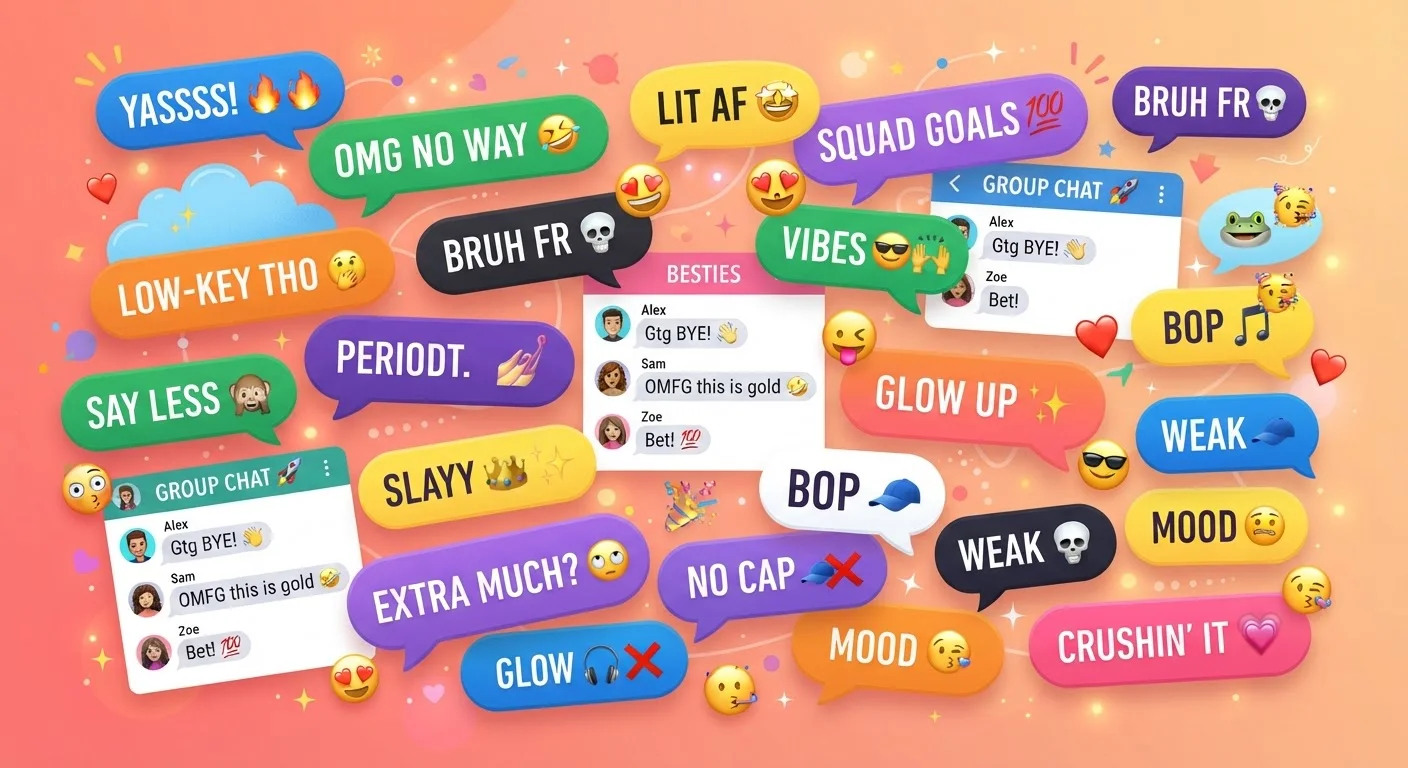
Photo: faqsvault.com editorial
Key Takeaways
- Internet slang is created by online communities and often reflects their shared values and humor.
- Words like 'slay,' 'delulu,' and 'lowkey' traveled from niche subcultures into mainstream conversation.
- Social media platforms accelerate how quickly new terms spread and evolve.
- Many viral slang terms originate in Black, queer, and gaming communities before being adopted more broadly.
- Shared vocabulary strengthens group identity and signals belonging within online communities.
- Languages have always absorbed informal slang — digital culture simply speeds up the process.
How Online Communities Become Word Factories
Every generation adds its own vocabulary to the English language. What's different today is the speed — and the scale. Digital platforms have turned small, niche communities into surprisingly powerful engines of linguistic creativity. A phrase coined in a gaming Discord server or a fan fiction forum can reach millions of people within days.
The process usually starts with a shared need. Communities develop language to describe experiences that existing words don't quite capture. When something feels both audacious and admirable, 'slay' becomes the natural fit. When someone is lovably overconfident about a celebrity crush, 'delulu' says what a full sentence can't. These words work because they carry emotional precision — they mean something specific to the people who use them.
As shared language reinforces group identity, slang does double duty: it communicates an idea while also marking the speaker as an insider. That social function is part of why new terms catch on so quickly within their home communities before traveling outward.
The Cultural Roots Behind Viral Words
It's worth pausing to ask: who is actually coining this language? A significant portion of widely adopted internet slang traces back to Black American communities, LGBTQ+ spaces, and fan cultures that have long developed rich, expressive vernaculars. Terms like 'slay,' 'sis,' 'lowkey,' 'no cap,' and 'shade' all have deep roots in Black and queer culture — particularly in ballroom and drag communities — long before they became TikTok staples.
Gaming communities have contributed their own lexicon too: 'GG' (good game), 'noob' (a newcomer), and 'griefing' (deliberately ruining another player's experience) have all migrated from headset conversations into broader everyday use. Similarly, fandoms on platforms like Tumblr and Archive of Our Own have generated terms — 'ship,' 'canon,' 'headcanon' — that now appear in mainstream entertainment media coverage.
“Language is not a system imposed from above but a living thing, shaped from below by the communities who use it. The internet hasn't broken language — it's given more communities a megaphone.”
— Gretchen McCulloch, Internet linguist and author of 'Because Internet: Understanding the New Rules of Language'
Understanding where slang comes from matters, not just academically, but ethically. When terms are lifted from marginalized communities without acknowledgment, the cultural context that gave them meaning often gets lost. Awareness of a word's origins doesn't stop it from being used — but it does invite a more thoughtful relationship with the language we borrow.
From Niche to Mainstream: The Journey of a Slang Term
The path from community coinage to dictionary entry is rarely straight. Most terms begin with a specific, often ironic meaning within a small group. As they spread, the meaning can stretch, shift, or flatten. 'Stan' — originally a reference to an obsessive fan, drawn from an Eminem song — now simply means an enthusiastic supporter. 'Salty,' meaning bitter or upset, has roots in African American Vernacular English and military slang well before the internet amplified it.
Social media platforms play a central accelerating role. TikTok's algorithm surfaces content across communities that would never have organically intersected, which means a term used by a niche aesthetic group — like those explored in aesthetic subcultures like Cottagecore and Dark Academia — can reach a mass audience almost overnight.
17+
Internet slang terms added to Merriam-Webster in recent years
Merriam-Webster has added terms like 'stan,' 'bussin,' and 'slay' to its dictionary, reflecting how internet-born language earns formal recognition.
~1B
Monthly active users on TikTok globally
According to publicly reported figures, TikTok's massive reach means slang coined on the platform can spread to millions within a single viral cycle.
70%+
Of Gen Z who say they use internet slang in real-life conversations
Research by various language and communications organizations suggests the majority of younger users regularly carry digital vernacular into offline speech.
For a deeper breakdown of how these terms function visually as well as verbally, the language of memes offers a useful companion lens on how meaning travels through images and text together.
Why Language Has Always Done This — Just Faster Now
There's a temptation to treat internet slang as something unprecedented, even alarming. But linguists generally see it as a continuation of how language has always worked. Every era produces informal vocabulary that eventually earns its place in standard usage — or doesn't. Slang from the 1920s jazz scene ('cat,' 'hip'), 1950s teen culture ('cool,' 'square'), and 1990s hip-hop all followed similar paths from subcultural invention to widespread adoption.
What the internet changes is velocity and visibility. Online communities offer connection at a scale that physical groups simply can't match, and that reach means language innovation travels farther, faster. A term that might have taken a decade to move from a regional community into national awareness can now do it in a month.
That speed also means slang burns out faster. Words that feel essential in one season can feel dated the next — a cycle that reflects not linguistic decline, but the living, adaptive nature of how people communicate. The communities coining new words today are doing something humans have always done: shaping language to fit their world.
This article is for general informational and cultural education purposes only.
Frequently Asked Questions
All published content on this website is for informational and educational purposes only and should not be taken as professional advice. We recommend that readers seek expert opinion before making any decisions. The website is not responsible for any actions taken based on the information provided on this website. We are not liable for any inaccuracies, modifications, or omissions in information. Moreover, external links or third-party content are provided for convenience; we are not liable for their correctness. Users are advised to verify every piece of information before they use it for any purpose.