
The Role of Shared Language in Binding Communities Together

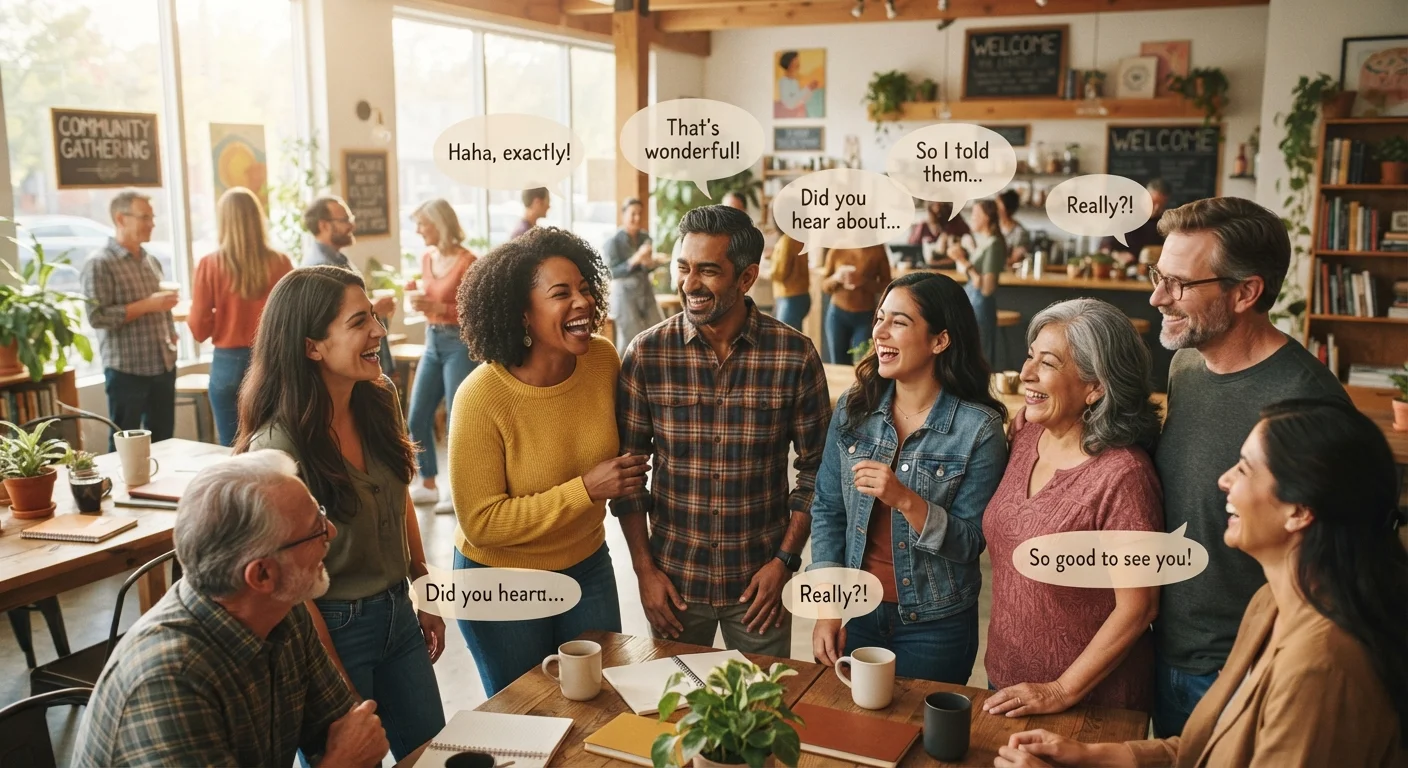
Photo: faqsvault.com editorial
Key Takeaways
- Shared language — including slang and dialects — signals membership and reinforces group identity.
- Communities develop insider terms naturally as a way of creating belonging and distinction.
- Linguistic inclusion can feel welcoming, but exclusion through language can isolate outsiders.
- Shared language evolves over time, reflecting changes in a community's values and experiences.
- Understanding a group's language is often the first step toward genuine belonging.
More Than Words: Language as a Social Signal
Think about the last time you heard someone use a phrase that immediately told you they were part of your world — a term from your neighborhood, your profession, your fan community, or your family. There was probably a small but real moment of recognition, maybe even warmth. That's shared language at work.
Language has always served a dual purpose: it communicates information, and it communicates identity. The specific words we choose, the cadence of our speech, the references we drop casually into conversation — all of these tell the people around us who we are and where we come from. Sociolinguists have long documented how speech patterns cluster around communities, whether defined by geography, ethnicity, profession, age, or shared interest.
This is why dialects persist even when speakers have access to a dominant or standardized form of a language. Maintaining a distinctive way of speaking is often an act of cultural loyalty, a declaration of belonging. When a community has its own language — whether a regional dialect, a professional lexicon, or internet slang — it has a living, evolving symbol of its shared identity.
The Social Power of Insider Terms
Every community, whether it's a tight-knit neighborhood, an online fandom, or a close group of friends, develops insider language over time. These terms emerge organically from shared experiences, humor, and values. They become a kind of shorthand that signals: we've been through something together, and we remember it the same way.
Insider language performs several functions simultaneously. It speeds up communication among members who share context. It creates warmth and familiarity — using the right term at the right moment signals that you're one of us. And it marks the boundaries of the group, distinguishing members from those who haven't yet shared those experiences.
This boundary-marking function is worth sitting with honestly. The same linguistic codes that make insiders feel seen can make outsiders feel invisible or excluded — sometimes without any conscious intent. Communities that value growth and inclusion tend to make space for newcomers to gradually learn the language, rather than treating fluency as a prerequisite for belonging. Subtle exclusions through language are among the patterns that can quietly erode community cohesion over time.
Dialects, Heritage, and Cultural Continuity
For many communities, shared language is inseparable from heritage. African American Vernacular English (AAVE), Spanglish, Appalachian English, New Orleans Creole — these are not simply regional quirks or grammatical deviations. They are rich linguistic traditions that carry the history, creativity, and resilience of their speakers across generations.
When a community's dialect or heritage language is devalued or ridiculed in broader society, the harm is twofold: it communicates disrespect for the speakers themselves, and it pressures people to abandon a key thread of their cultural identity. Conversely, when a community's language is celebrated and preserved, it reinforces a sense of continuity and collective self across time.
Language revitalization efforts among Indigenous communities across the US illustrate this powerfully. Advocates for these languages understand that when a language disappears, an entire way of understanding and relating to the world risks disappearing with it. Preserving language is, in this sense, an act of community survival.
When Language Evolves — and What That Tells Us
Shared language is never static. It shifts as communities encounter new experiences, absorb new members, and respond to cultural change. The evolution of a community's language is itself a kind of living record of where that community has been and where it's going.
Consider how certain words move from niche community use into the mainstream. Terms that originated in LGBTQ+ communities — like "camp," "shade," or "reading" — have entered broader popular culture. This can be a form of cultural recognition, but it also raises real questions about attribution and ownership. When insider language goes mainstream, members of the originating community sometimes feel their cultural expression has been borrowed without credit — a tension worth acknowledging with care.
The same dynamic appears in professional communities, online subcultures, and generational groups. Gen Z's linguistic innovations, for example, spread rapidly via social media, but they also carry specific social meanings that shift as they travel. Understanding those meanings — not just mimicking the words — is what separates genuine membership from surface-level imitation.
Shared language, at its best, is a living expression of what genuine belonging feels like — the sense that your words will land, that your references will be caught, that you don't have to translate yourself to be understood. It's one of the quieter, more powerful ways communities hold themselves together. And it's worth paying attention to.
“A language is not just words. It's a culture, a tradition, a unification of a community, a whole history that creates what a community is. It's all embodied in that language.”
— Noam Chomsky, Linguist and cognitive scientist, MIT
Frequently Asked Questions
All published content on this website is for informational and educational purposes only and should not be taken as professional advice. We recommend that readers seek expert opinion before making any decisions. The website is not responsible for any actions taken based on the information provided on this website. We are not liable for any inaccuracies, modifications, or omissions in information. Moreover, external links or third-party content are provided for convenience; we are not liable for their correctness. Users are advised to verify every piece of information before they use it for any purpose.