
Air Purifiers vs. Humidifiers: Clearing Up the Confusion

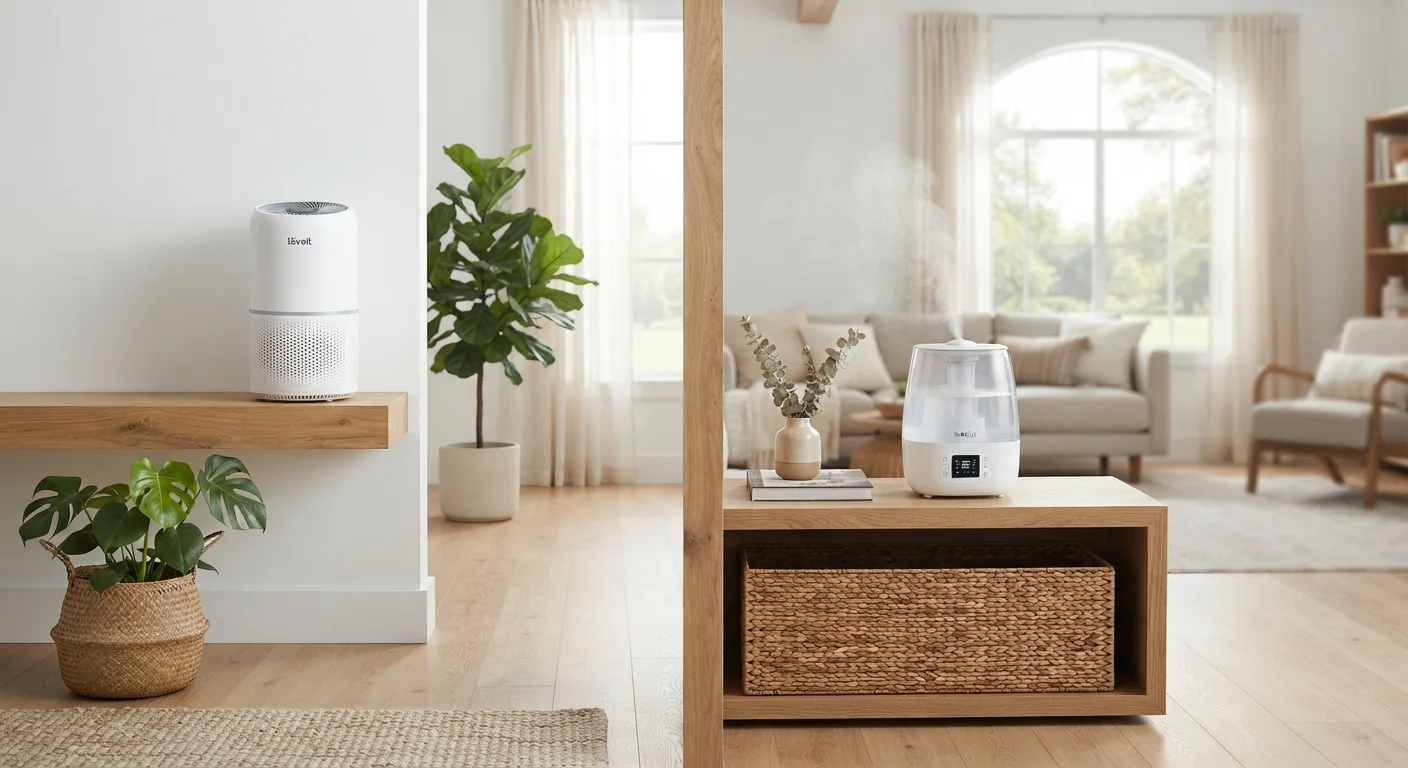
Photo: faqsvault.com editorial
Key Takeaways
- Air purifiers remove particles and pollutants from the air; humidifiers add water vapor to increase moisture levels.
- The two devices address completely different problems and cannot substitute for one another.
- Choosing the wrong device can be ineffective or, in some cases, worsen your specific concern.
- Some situations — like dry winters with heavy dust — may genuinely call for both devices used together.
- Regular maintenance, including filter changes and tank cleaning, is essential for both to work safely.
What Each Device Actually Does
The confusion between air purifiers and humidifiers is understandable — both sit on countertops, hum quietly, and claim to improve the air you breathe. But they work through entirely different mechanisms and solve entirely different problems.
An air purifier draws room air through one or more filters — most commonly a HEPA (High-Efficiency Particulate Air) filter — and traps particles like dust, pollen, mold spores, pet dander, and some bacteria. Some models add an activated carbon layer to absorb odors and gases. The cleaned air is then circulated back into the room. At no point does a purifier change the humidity level or add anything to the air.
A humidifier does the opposite in one key sense: it adds to the air rather than removes from it. It releases water vapor or mist to raise the relative humidity of a room. It does nothing to filter particles, eliminate allergens, or reduce pollutants. In fact, a poorly maintained humidifier can become a source of mold or bacteria if its water tank is not cleaned regularly.
Think of it this way: if your air is dirty, you need a purifier. If your air is dry, you need a humidifier. These are separate problems requiring separate solutions.
| Criterion | Air Purifier | Humidifier |
|---|---|---|
| Primary function | Removes particles and pollutants | Adds moisture to the air |
| Targets | Dust, allergens, smoke, odors | Low humidity, dry air |
| Key technology | HEPA and/or carbon filters | Ultrasonic mist or evaporative wick |
| Changes humidity level | No | Yes — raises humidity |
| Filters airborne allergens | Yes | No |
| Main maintenance task | Replace filters periodically | Clean water tank regularly |
| Overuse risk | Reduced filtration if filter neglected | Mold/bacteria growth if tank dirty |
Recognizing Your Actual Indoor Air Problem
Before purchasing either device, it helps to identify which problem — or problems — you're actually dealing with. The symptoms each condition causes are quite different.
Signs your air may have a particle or pollutant problem:
- Sneezing, itchy eyes, or a runny nose that worsens indoors
- Visible dust accumulating quickly on surfaces
- Pet odors or smoke that linger despite ventilation
- Worsening asthma or allergy symptoms at home
Signs your air may be too dry:
- Dry, tight, or flaky skin, especially in winter
- Frequent static electricity shocks
- Waking with a dry throat or irritated nasal passages
- Cracking in wood furniture or flooring
A simple hygrometer — an inexpensive device that measures relative humidity — can tell you exactly where your home's humidity level sits. Most comfort and health guidelines suggest indoor humidity between 30% and 50%. Readings consistently below that range suggest a humidifier may help. If humidity is within range but you still experience allergy-like symptoms, an air purifier is the more relevant tool.
Can You Use Both at Once?
Maintenance, Limits, and What to Realistically Expect
Neither device is a set-and-forget solution. Both require consistent upkeep to remain effective and safe.
Air purifier filters have a finite lifespan. A clogged or saturated HEPA filter can restrict airflow and reduce effectiveness — manufacturers typically recommend replacement every 6 to 12 months depending on usage and air quality. Check the filter indicator or schedule regular inspections rather than waiting for performance to drop noticeably.
Humidifiers carry their own maintenance demands. Standing water in the tank can harbor mold and bacteria, which the device then disperses into your air — the opposite of the intended benefit. Empty, rinse, and dry the tank regularly, and follow the manufacturer's cleaning instructions. Distilled or demineralized water reduces mineral buildup, which can otherwise coat nearby surfaces with a fine white dust.
It's also worth being realistic about the scope of each device. An air purifier covers the room it's placed in, not an entire home, unless it's a whole-house system. A humidifier affects only the immediate area around it unless the room is small and well-sealed. Neither device replaces good ventilation, regular cleaning, or — for serious respiratory concerns — professional medical advice.
Used correctly and maintained properly, both tools can make a genuine, measurable difference in everyday comfort. The key is matching the device to the actual problem — and now you have the information to do exactly that.
This article is for general informational purposes only and does not constitute medical advice. If you have respiratory conditions, allergies, or health concerns related to indoor air quality, consult a qualified healthcare professional.
All published content on this website is for informational and educational purposes only and should not be taken as professional advice. We recommend that readers seek expert opinion before making any decisions. The website is not responsible for any actions taken based on the information provided on this website. We are not liable for any inaccuracies, modifications, or omissions in information. Moreover, external links or third-party content are provided for convenience; we are not liable for their correctness. Users are advised to verify every piece of information before they use it for any purpose.