
What Is a Business Plan and Why Does It Matter?

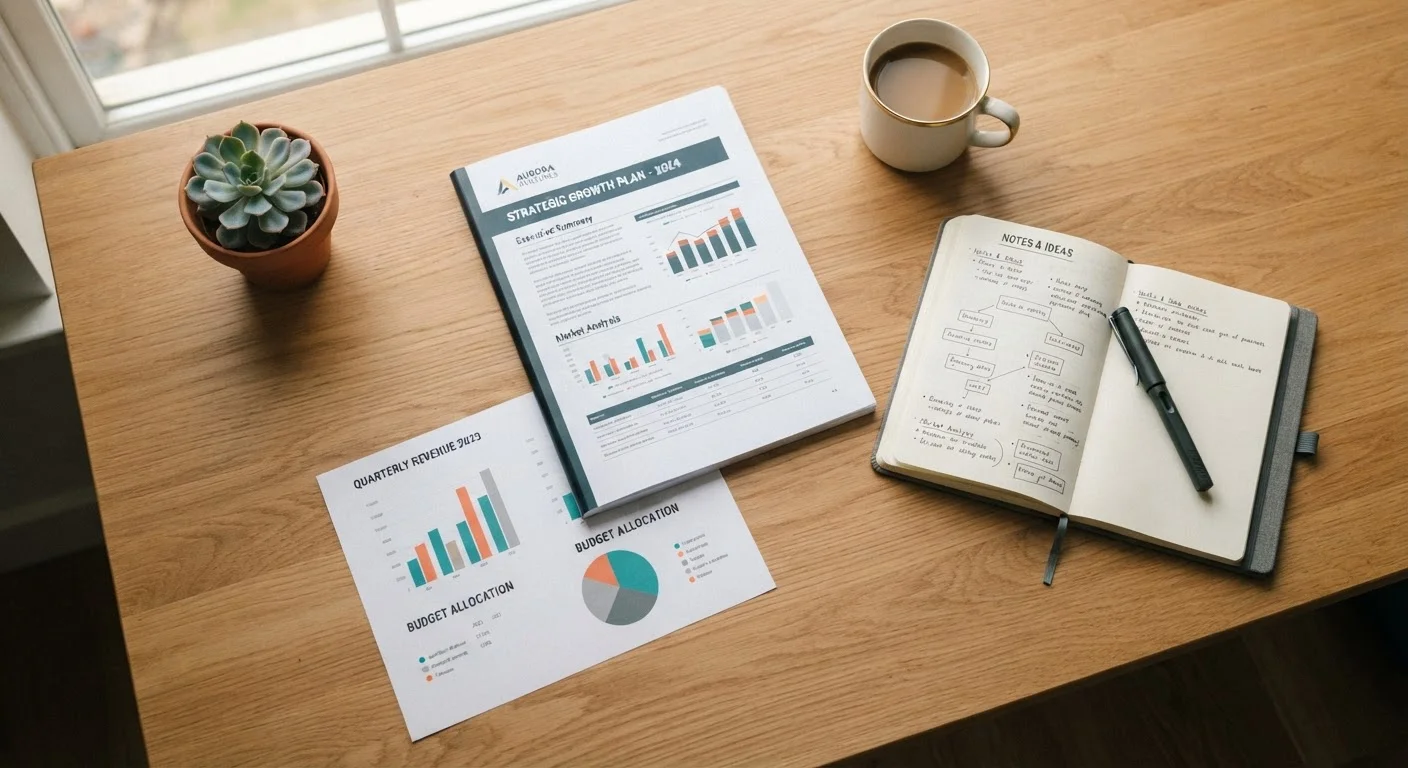
Photo: faqsvault.com editorial
Key Takeaways
- A business plan clarifies your goals, strategy, and financial expectations before you spend a dollar.
- Lenders and investors typically require a formal business plan before committing capital.
- Writing a plan forces you to pressure-test assumptions and spot problems early.
- Plans should be updated regularly — they're working documents, not one-time exercises.
- Even a simple one-page plan is more useful than no plan at all.
What a Business Plan Actually Is
A business plan is a structured document that captures the full picture of a business idea — where it stands today, where it aims to go, and how it intends to get there. It covers everything from your target customer and competitive landscape to your revenue model and cash flow projections.
It's common to think of a business plan as something you write once to satisfy a banker, then file away. But the real value is in the process itself. Drafting one forces you to confront uncomfortable questions: Who exactly is your customer? What happens if revenue comes in 30% lower than expected? How long can you operate before you break even?
Answering those questions on paper — before you've committed significant money — is far cheaper than discovering the gaps mid-launch. For a broader look at running a business from the ground up, see the full overview of small business ownership.
The Core Sections of a Business Plan
While formats vary, most traditional business plans include these key components:
- Executive Summary: A concise overview of the entire plan — typically written last but placed first. It should stand on its own for a reader who only has two minutes.
- Business Description: What the company does, its legal structure, location, and the problem it solves.
- Market Analysis: Research on your target market, customer demographics, industry trends, and competitive landscape.
- Organization and Management: Who runs the business and what relevant experience they bring.
- Products or Services: What you're selling, how it's priced, and what makes it different from alternatives.
- Marketing and Sales Strategy: How you'll attract and retain customers.
- Financial Projections: Projected income statements, cash flow statements, and balance sheets — usually covering three to five years.
- Funding Request (if applicable): The specific amount of capital you're seeking and how you'll use it.
Not every plan needs every section in equal depth. A solo freelancer testing a new service offering needs a different level of detail than a startup seeking $500,000 in investor funding.
2x
Likelihood of business growth with a plan
Research published in the Strategic Management Journal found that entrepreneurs who wrote business plans were roughly twice as likely to achieve viability compared to those who did not.
20%
U.S. small businesses that fail in year one
According to U.S. Bureau of Labor Statistics data, approximately 20% of small businesses close within their first year, often citing poor planning and cash flow management.
82%
Small business failures linked to cash flow problems
A commonly cited U.S. Bank study found that 82% of small business failures are attributed to poor cash flow management — a core issue a solid business plan is designed to address.
Why the Financial Section Deserves Extra Attention
Of all the components, financial projections tend to be the most intimidating — and the most important. A lender or investor will scrutinize this section closely, but even if you're not seeking outside funding, your projections are the mechanism by which a plan becomes actionable.
Key financial concepts every plan should address include cash flow timing (when money comes in versus when bills are due), your breakeven point (the revenue level at which costs are fully covered), and gross margin (how much you keep from each dollar of revenue after direct costs). Understanding these numbers shapes every operational decision you make. For a plain-language breakdown of these terms, see the financial concepts every new business owner should know.
When building projections, use conservative estimates. Overly optimistic revenue forecasts are one of the most common — and most damaging — mistakes in early-stage business plans.
How a Business Plan Shapes Daily Decisions
A business plan isn't just a document you present to others — it's a reference point you return to when making real decisions. Should you hire a part-time employee this quarter? Does the timing make sense relative to your projected cash flow? Is a new product idea consistent with your stated market focus?
Without a plan, these decisions rely on gut instinct alone. With one, you have a structured baseline to measure against. When reality diverges from projections, the plan helps you understand whether you're facing a temporary variance or a fundamental problem with your assumptions.
Start With a Lean Plan, Then Expand
Plans also communicate credibility. When approaching a bank for a small business loan, or pitching to a potential partner, a well-researched plan signals that you understand your market and have thought through the risks — not just the upside.
This article is for general informational and educational purposes only and does not constitute financial, legal, or business advice. Consult a qualified professional for guidance specific to your situation.
Frequently Asked Questions
All published content on this website is for informational and educational purposes only and should not be taken as professional advice. We recommend that readers seek expert opinion before making any decisions. The website is not responsible for any actions taken based on the information provided on this website. We are not liable for any inaccuracies, modifications, or omissions in information. Moreover, external links or third-party content are provided for convenience; we are not liable for their correctness. Users are advised to verify every piece of information before they use it for any purpose.