
What a Budget Actually Does (And Why Most People Misunderstand It)

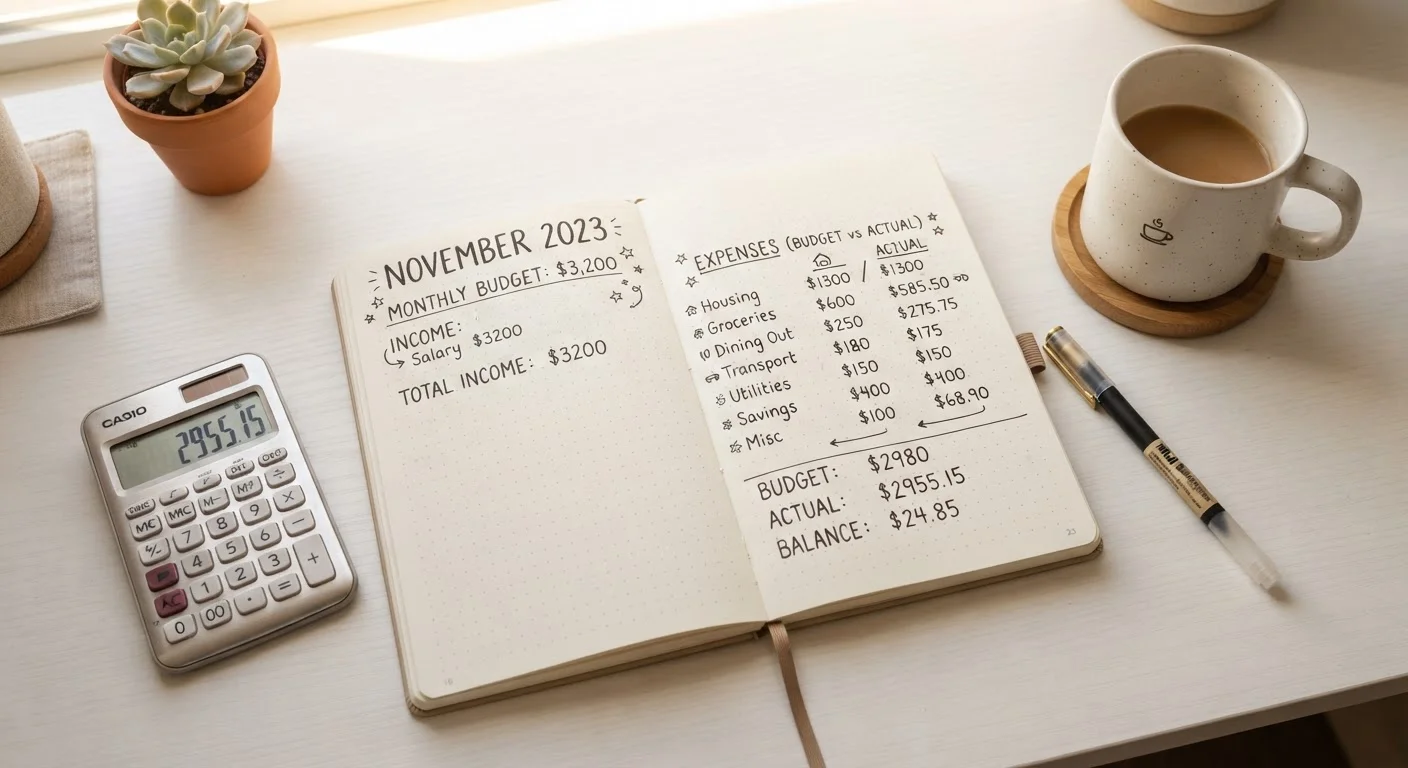
Photo: faqsvault.com editorial
Key Takeaways
- A budget is a spending plan, not a spending restriction.
- Most people avoid budgeting because they confuse it with deprivation.
- Every dollar you earn should be assigned a purpose — including fun money.
- Budgets work best when they're flexible and adjusted regularly.
- Starting a budget doesn't require perfect numbers — estimates get you moving.
The Misunderstanding That Keeps Most People From Starting
Ask someone why they don't have a budget, and the most common answer sounds like this: "I don't want to feel like I can't spend anything." That response reveals the core confusion — most people think a budget is a mechanism for saying no. It isn't.
A budget is a mechanism for saying yes on purpose. It's a plan you write in advance that determines how each dollar of your income gets used. Some of those dollars pay rent. Some cover groceries. Some go to savings. And some — if you plan for it — go straight to dinner out, a streaming subscription, or whatever you actually enjoy. The budget doesn't eliminate that spending. It just makes it intentional.
The restriction framing is so persistent that many people associate budgeting with financial hardship — something you do when things are tight, not a tool you'd use if you had choices. That misunderstanding is one of the most common money myths around. In reality, people with strong financial habits tend to budget more consistently, not less. See common money myths debunked for a broader look at how these misconceptions build up.
What a Budget Actually Does
At its most basic, a budget does three things:
- It tells you what's coming in. Your income — whether from a salary, hourly wages, freelance work, or another source — is the starting point. You can only plan what you actually have.
- It accounts for what's going out. Fixed expenses (rent, loan payments, insurance) and variable expenses (groceries, gas, entertainment) are both mapped out. Nothing gets left in the dark.
- It shows the gap. The difference between what comes in and what goes out reveals whether you're moving toward your goals or away from them.
That gap is where the budget earns its value. If your income exceeds your planned expenses, the surplus gets assigned a purpose — an emergency fund, a vacation, retirement contributions — rather than disappearing into untracked spending. If expenses are running higher than income, the budget makes that visible early, while you still have time to adjust.
~1 in 3
U.S. adults who follow a formal budget
Surveys by NFCC and similar organizations consistently find that a minority of American adults maintain a written or tracked budget.
74%
Adults who feel anxious about personal finances
A long-running American Psychological Association survey on stress finds financial concerns are among the most commonly reported stressors for U.S. adults.
Notice that none of those three functions involve punishment or deprivation. A budget is essentially a map — and maps don't stop you from going somewhere, they just help you understand where you're headed.
Why the Word Itself Causes Problems
Language shapes behavior. The word "budget" carries decades of cultural baggage — it's used interchangeably with "cheap," "bare-bones," and "cut-back" in everyday speech. A "budget hotel" isn't a well-planned hotel; it's a stripped-down one. That connotation bleeds into personal finance conversations and distorts what people expect the tool to do.
A more accurate mental model: think of a budget as a spending plan. Every household already has a de facto spending plan — it's just usually unwritten and reactive. A formal budget makes that plan explicit and intentional.
The emotional resistance also runs deeper for some people. Sitting down to look at income and expenses can feel threatening, especially if there's anxiety around money already. But avoiding the plan doesn't improve the underlying numbers — it just removes your ability to influence them. Understanding that discomfort and separating it from the tool itself is part of what makes budgeting actually stick.
A Budget Has to Fit Your Life, Not the Other Way Around
One reason people abandon budgets quickly is that they try to adopt someone else's template without adjusting for their own circumstances. A budget that assigns 15% of income to dining out for one household might be completely wrong for a family with a very different set of priorities, fixed costs, or goals.
Effective budgets are built around your actual numbers — not averages, not aspirational figures, not what a spreadsheet template suggests. Your rent is what it is. Your commute costs what it costs. A realistic budget starts from there.
Flexibility matters too. A budget isn't a contract you sign once and follow forever. Life changes — income shifts, unexpected expenses arrive, goals evolve. Reviewing and adjusting the plan regularly is part of how it stays useful rather than becoming something you feel guilty for not following perfectly.
If you're ready to put these ideas into practice, building your first budget from scratch walks through the process step by step. And once you're comfortable with the basics, zero-based budgeting vs. the 50/30/20 rule explains two of the most widely used methods for structuring how income gets allocated.
This article is for general informational and educational purposes only and does not constitute personalized financial advice. Consider consulting a qualified financial professional for guidance specific to your situation.
Frequently Asked Questions
All published content on this website is for informational and educational purposes only and should not be taken as professional advice. We recommend that readers seek expert opinion before making any decisions. The website is not responsible for any actions taken based on the information provided on this website. We are not liable for any inaccuracies, modifications, or omissions in information. Moreover, external links or third-party content are provided for convenience; we are not liable for their correctness. Users are advised to verify every piece of information before they use it for any purpose.