
How Compound Interest Works — and Why It Matters So Much Over Time

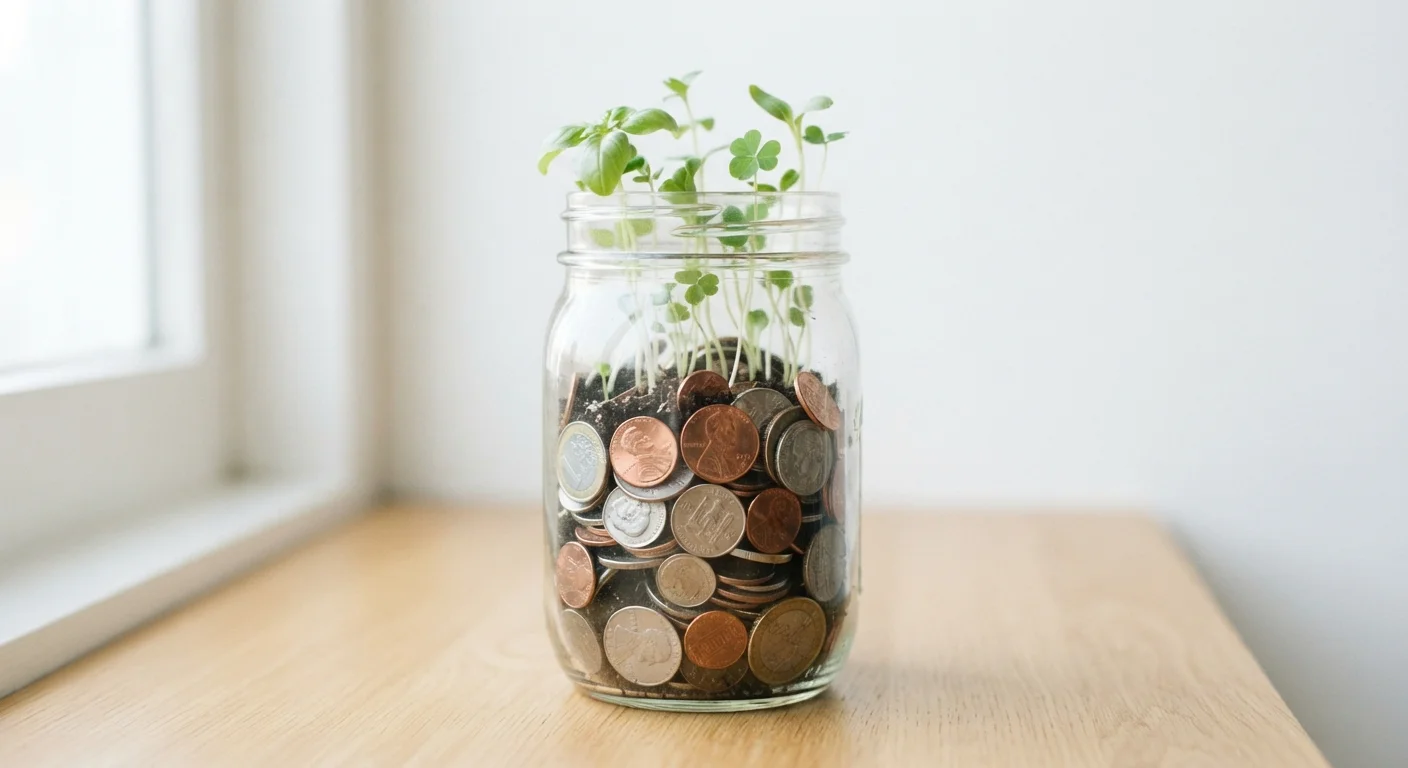
Photo: faqsvault.com editorial
Key Takeaways
- Compound interest grows your savings by earning returns on previously earned interest, not just the original amount.
- The longer money compounds, the more dramatic the growth — time is the most powerful variable.
- High-interest debt compounds against you, making early repayment financially critical.
- Compounding frequency matters: daily compounding produces more growth than annual compounding at the same rate.
- Starting early, even with small amounts, consistently outperforms starting late with larger amounts.
The Core Mechanic: Why Compound Interest Is Different
Most people learn that banks pay interest on savings. What isn't always taught clearly is what that interest is calculated on — and that distinction changes everything.
With simple interest, you earn a fixed return on your original deposit, nothing more. If you deposit $1,000 at 5% simple interest annually, you earn $50 every year, regardless of how long the money sits there.
With compound interest, the interest you've already earned gets added to your balance, and that new total becomes the base for the next calculation. In year one, you earn $50 on $1,000. In year two, you earn 5% on $1,050 — so $52.50. The amounts look small at first. Over decades, the gap between simple and compound growth becomes enormous.
This is why compounding is often described as exponential rather than linear growth. The balance doesn't just add a fixed amount each year — it accelerates. Understanding this mechanic is foundational to making sense of both saving and borrowing. For a broader grounding in financial vocabulary, see Key Terms in Personal Finance Explained in Plain English.
Time: The Most Powerful Variable in Compounding
The math of compound interest has one variable that dwarfs all others: time. The longer money compounds, the more aggressively it grows — not because the rate changes, but because the base keeps expanding.
Consider two hypothetical savers, both earning a 7% average annual return:
- Person A invests $5,000 at age 25 and adds nothing more.
- Person B waits until age 35 to invest the same $5,000, also adding nothing more.
By age 65, Person A's single $5,000 investment grows to roughly $75,000. Person B's grows to about $38,000 — less than half — simply because it had 10 fewer years to compound. This is a general illustration using consistent assumptions, not a guarantee of any specific outcome.
The practical implication is clear: starting earlier, even with small amounts, is typically more effective than starting later with larger amounts. This is the core reason financial educators emphasize beginning to save and invest as early as possible. It also connects directly to the difference between saving and investing — understanding where each approach fits in your financial life matters when you're deciding where to let compounding work for you.
72
Years to double money at 1% (Rule of 72)
The Rule of 72 estimates doubling time by dividing 72 by the annual rate — at 6%, money doubles roughly every 12 years; at 1%, it takes about 72 years.
10 years
Compounding head start that can roughly double an outcome
General compounding illustrations consistently show that a 10-year earlier start at the same return rate can produce roughly double the end balance, even with no additional contributions.
22%+
Average credit card APR in recent U.S. data
Federal Reserve data has tracked average credit card interest rates above 20% in recent periods, illustrating how powerfully compounding can work against consumers carrying revolving balances.
When Compounding Works Against You: Debt
The same force that builds wealth in a savings account quietly erodes financial stability when it's applied to debt. Credit card balances are the clearest example. If you carry a $3,000 balance on a card charging 22% APR and make only minimum payments, the interest compounds — often daily — against you. The balance grows faster than minimum payments reduce it, and what started as $3,000 can take years and cost thousands more than the original charge to fully repay.
Student loans, personal loans, and mortgages all involve interest that compounds according to their specific terms. The critical habit is understanding whether interest accrues on your outstanding balance and how frequently. Even a few extra dollars applied to principal each month can meaningfully reduce the total interest you pay over the life of a loan, because it lowers the base on which future interest compounds.
For a practical breakdown of managing this dynamic across different debt types, this comprehensive debt guide covers repayment strategies and what to prioritize.
This article is for general financial education only and is not personalized financial, investment, tax, or legal advice. Consider speaking with a licensed financial professional about decisions specific to your situation.
Practical Ways to Put Compound Interest to Work
Understanding compounding is useful only if it changes behavior. Here are the principles that translate the concept into action:
- Start as early as you can. Even small, regular contributions to a savings or retirement account matter more when they have time to compound. Waiting for a larger amount to invest often costs more in lost compounding than the extra dollars saved.
- Pay attention to compounding frequency. Two accounts with the same stated interest rate can produce different results if one compounds daily and the other annually. Check the annual percentage yield (APY) — it reflects the true effective rate after compounding is factored in.
- Reinvest returns automatically. In investment accounts, reinvesting dividends and returns rather than withdrawing them keeps the compounding base growing. Many retirement accounts and brokerage accounts offer automatic reinvestment options.
- Eliminate high-interest debt aggressively. Every dollar of high-interest debt you carry is compounding against you at a guaranteed rate. Paying it down often delivers a better guaranteed return than almost any savings vehicle.
- Build consistent saving habits. Compounding rewards regularity. Methods like sinking funds — saving incrementally toward specific future costs — can help maintain the discipline. Sinking funds explained is a useful starting point for building that structure.
Frequently Asked Questions
All published content on this website is for informational and educational purposes only and should not be taken as professional advice. We recommend that readers seek expert opinion before making any decisions. The website is not responsible for any actions taken based on the information provided on this website. We are not liable for any inaccuracies, modifications, or omissions in information. Moreover, external links or third-party content are provided for convenience; we are not liable for their correctness. Users are advised to verify every piece of information before they use it for any purpose.