
Glycaemic Index vs. Glycaemic Load: Two Measures, One Carbohydrate Story

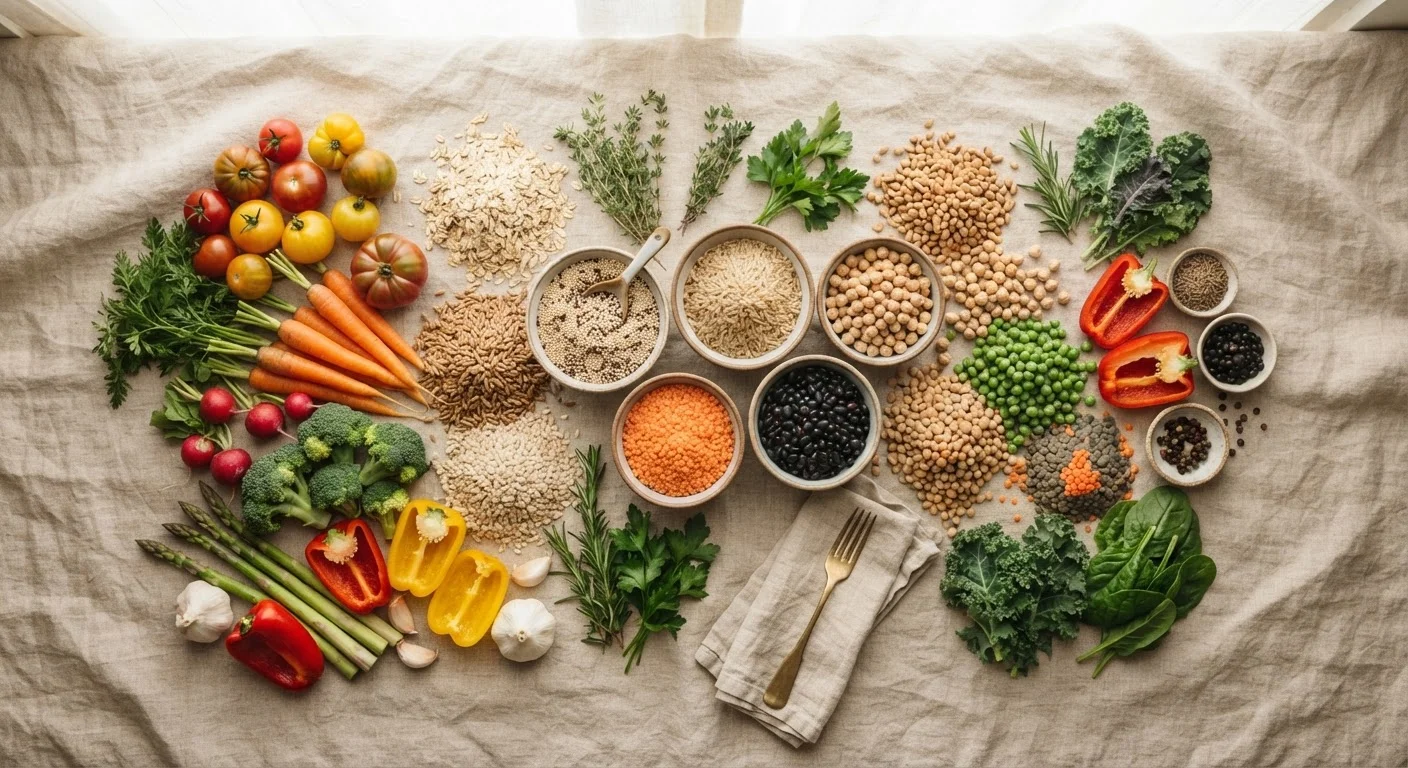
Photo: faqsvault.com editorial
Key Takeaways
- GI ranks foods by how fast their carbohydrates raise blood sugar relative to pure glucose.
- GL multiplies GI by the grams of carbohydrate in a typical serving, giving a more practical number.
- A food can have a high GI but a low GL if a normal portion contains very few carbohydrates.
- Neither metric replaces overall dietary quality — food context and eating patterns matter just as much.
- Both tools are most useful as educational guides, not strict rules, for everyday eating decisions.
Why Carbohydrate Quality Has Two Different Scores
When nutrition researchers began studying how carbohydrates affect blood sugar in the early 1980s, a single ranking system emerged: the Glycaemic Index. It was a breakthrough — for the first time, foods could be measured not just by their carbohydrate content but by how rapidly those carbohydrates entered the bloodstream as glucose.
But GI had a blind spot. It said nothing about how much of a food people actually eat. That gap led researchers to develop a second measure, Glycaemic Load, which layers portion size into the equation. Together, the two metrics tell a more complete carbohydrate story — but they are often conflated, which can lead to misleading conclusions about everyday foods.
Breaking Down the Glycaemic Index
The Glycaemic Index scores a carbohydrate-containing food on a scale of 0 to 100, based on how quickly blood glucose rises after eating a fixed amount of that food (typically 50 grams of available carbohydrate) compared to eating pure glucose, which scores 100.
- Low GI: 55 or below (e.g., lentils, oats, most fruits)
- Medium GI: 56–69 (e.g., brown rice, wholemeal bread)
- High GI: 70 or above (e.g., white bread, cornflakes, watermelon)
The limitation becomes clear with that last example. Watermelon scores around 72 on the GI scale — technically high. But a generous slice of watermelon contains very few actual carbohydrates because the fruit is mostly water. Eating it produces a far smaller blood-sugar response than the GI number alone suggests.
| Criterion | Glycaemic Index (GI) | Glycaemic Load (GL) |
|---|---|---|
| What it measures | Speed of blood-sugar rise | Speed × carbohydrate quantity per serving |
| Portion size considered | No — uses a fixed 50g of carbs | Yes — uses the actual serving size |
| Scale | 0–100 (glucose = 100) | Low ≤10, Medium 11–19, High ≥20 |
| Watermelon example | GI ≈ 72 (high) | GL ≈ 4 per slice (low) |
| Best practical use | Comparing food types side by side | Estimating real-world meal impact |
| Key limitation | Ignores how much you eat | Requires knowing carb grams per serving |
Understanding Glycaemic Load
Glycaemic Load corrects for this limitation by incorporating portion size. The formula is straightforward: multiply the food's GI by the grams of carbohydrate in the portion you're eating, then divide by 100.
GL = (GI × grams of carbohydrate per serving) ÷ 100
Using the watermelon example: a 120-gram slice contains roughly 6 grams of available carbohydrate. With a GI of 72, its GL works out to approximately 4 — which falls firmly in the low range. That's a very different picture from a high-GI label.
- Low GL: 10 or below
- Medium GL: 11–19
- High GL: 20 or above
Foods with a high GI but low GL include carrots, parsnips, and many melons. Conversely, a food like sushi rice may look moderate on the GI scale but deliver a high GL when served in large amounts.
What the Research Suggests — and Where It Falls Short
A body of observational and clinical research — including work published in journals such as The American Journal of Clinical Nutrition — suggests that diets with a lower overall GL are associated with more stable blood-glucose patterns and may support longer-term cardiometabolic health. However, researchers are careful to note that GI and GL are tools within a broader dietary context, not stand-alone prescriptions.
GI Values Can Vary Between Studies
It's also worth knowing that a food's GI can shift significantly depending on ripeness, cooking method, food pairing, and even individual physiology. Eating carbohydrates alongside protein, fat, or fiber generally slows glucose absorption — meaning the GI of a food eaten alone can be quite different from its effect within a mixed meal.
This article is for general informational and educational purposes only and is not a substitute for personalized medical or dietary advice. If you have concerns about blood sugar or any health condition, please consult a qualified healthcare professional.
Putting Both Metrics to Practical Use
Neither GI nor GL needs to become a daily calculation. Their real value is in building intuition — a sense of which carbohydrates tend to act quickly and which are slower-burning — rather than in rigid scorekeeping.
A few practical ideas for bringing these concepts into everyday awareness:
- Favour minimally processed carbohydrates when possible. Whole grains, legumes, and most vegetables tend to score lower on both scales than their refined counterparts.
- Notice portion context. A small serving of a high-GI food may have a modest real-world impact, while a large serving of a moderate-GI food can add up.
- Pair carbohydrates with other nutrients. Including protein, healthy fats, or fiber-rich vegetables in the same meal naturally moderates glucose response without needing to consult a table.
- Treat both metrics as one input among many. Nutrient density, fiber content, sodium, and overall eating patterns all matter alongside blood-sugar dynamics.
For anyone managing a specific health condition, these metrics are worth discussing with a registered dietitian or physician who can offer individualized guidance rather than general principles.
All published content on this website is for informational and educational purposes only and should not be taken as professional advice. We recommend that readers seek expert opinion before making any decisions. The website is not responsible for any actions taken based on the information provided on this website. We are not liable for any inaccuracies, modifications, or omissions in information. Moreover, external links or third-party content are provided for convenience; we are not liable for their correctness. Users are advised to verify every piece of information before they use it for any purpose.