
Journalling for Mental Clarity: A Practical Starting Point

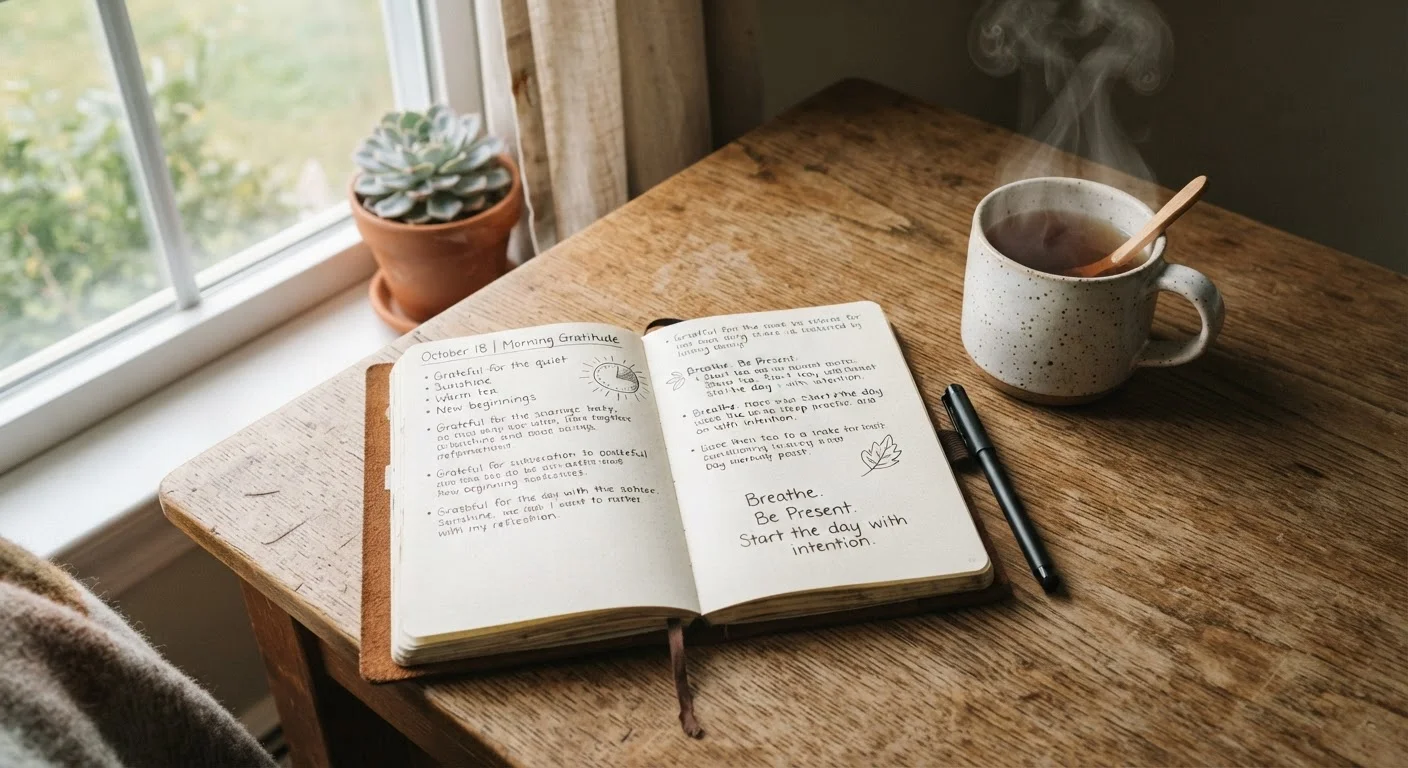
Photo: faqsvault.com editorial
Key Takeaways
- Journalling doesn't require writing talent — consistency and honesty matter more than style.
- Different formats suit different people; experimenting is part of the process.
- Even five minutes a day can help untangle thoughts and reduce mental noise.
- Prompts are a useful scaffold when a blank page feels daunting.
- Pairing journalling with an existing routine makes it far easier to sustain.
Why Journalling Supports Mental Clarity
Most of us carry a steady hum of unfinished thoughts — worries left half-examined, plans never written down, emotions that linger without a name. Journalling offers a simple but surprisingly effective way to offload that mental weight onto the page, creating a bit more room to think clearly.
Research in the field of expressive writing, much of it built on the foundational work of psychologist James Pennebaker, suggests that writing about thoughts and feelings can help people process difficult experiences and reduce emotional intensity. It's worth noting that this is general wellness evidence, not a clinical recommendation — journalling isn't a treatment and doesn't replace professional support when that's needed.
What it can do is act as a kind of mental filing system. When you give a worry a sentence, it stops looping. When you write down a goal, it becomes more concrete. The act of translating thoughts into language forces a degree of structure that our minds often resist doing quietly. For anyone who feels scattered, overwhelmed, or just a bit disconnected from themselves, that process can feel genuinely relieving. A weekly wellbeing check-in pairs well with journalling for anyone who wants a more structured approach to self-awareness.
Expressive writing
A form of journalling where you write openly and honestly about your thoughts and feelings, without worrying about structure or style. It's been studied as a way to help people process emotions.
Habit stacking
A habit-building technique where you attach a new behaviour to an existing one — for example, journalling immediately after your morning coffee — to make it easier to remember and repeat.
Prompted journalling
Journalling that begins with a guiding question or sentence starter, rather than a blank page. Prompts are useful when you're unsure what to write about.
Bullet journalling
A structured journalling method that uses short lists, symbols, and brief notes to track tasks, habits, and reflections in one place. It combines planning with self-reflection.
Mental clarity
A sense of clearheadedness and focus — the feeling that your thoughts are organised rather than cluttered. Writing regularly is one way some people work toward this state.
Choosing a Format That Works for You
There's no single right way to journal. The format that works for you depends on how your mind naturally organises itself — and the best approach is usually the one you'll actually return to.
- Free writing: Set a timer for five to ten minutes and write without stopping or editing. Don't worry about grammar, coherence, or making sense. The point is to let thoughts surface without judgment.
- Prompted journalling: Use a question or sentence starter to focus your writing. This is especially useful when the blank page feels intimidating.
- Gratitude journalling: Note a few things you're genuinely appreciative of. Research suggests this practice can gently shift attention toward the positive without denying difficulty — though results vary by person.
- Bullet journalling: A more structured, list-based approach popular for tracking tasks, moods, and habits alongside reflective writing.
- Digital journalling: Apps or a simple word processor work well for people who type faster than they write, or who value searchability and privacy.
Experiment with more than one. Many people find that their preferred format shifts with mood, season, or what they're working through. There's no wrong answer here — only what fits your life right now.
Prompts to Get You Started
A blank page can stop even the most enthusiastic beginner. Prompts act as scaffolding — they give you something to push against until the writing finds its own direction. Here are some to try:
- What's taking up the most mental space for me right now?
- What do I need more of this week — and what do I need less of?
- Describe one thing that happened recently that I haven't fully processed.
- What would a good day look like tomorrow?
- What am I avoiding, and what might that be telling me?
- If a trusted friend were watching my week, what would they notice?
You don't need to answer fully or reach a neat conclusion. Sometimes the value is simply in asking the question honestly. A sentence or two is enough to open a thread worth following. Over time, you may find your own recurring prompts that feel most alive for where you are.
Building the Habit Without Burning Out
The biggest mistake new journallers make is starting too ambitiously. Committing to a daily page count or elaborate ritual sounds motivating on day one — and feels like a burden by day eight. A lighter approach tends to last longer.
Consider attaching journalling to something you already do. Writing for a few minutes after your morning coffee, during a lunch break, or just before you put your phone away at night removes the friction of deciding when to do it. This concept — known in habit research as "habit stacking" — works well for building new daily habits when time is tight.
Keep your tools simple and accessible. A notebook left on your desk or an app already on your phone removes the small but real barrier of setup. If you miss a day, pick it back up the next without guilt — consistency over time matters more than an unbroken streak.
Keep Your Setup as Simple as Possible
Before adding journalling to your routine, it's also worth pausing to see where it might actually fit. A habit audit can help you identify realistic slots in your week without overloading yourself.
Common Stumbling Blocks and How to Move Past Them
Even people who genuinely want to journal run into familiar obstacles. Recognising them in advance makes them easier to navigate.
- "I have nothing interesting to write about."
- Journalling isn't a performance. Mundane entries — what you noticed, how you felt waiting in traffic, what's been quietly irritating you — are exactly the right material. Ordinary thoughts, examined honestly, are often where the most useful insights live.
- "I'm worried someone will read it."
- Privacy is a real concern for some people. A locked notebook, a password-protected app, or even deleting entries after writing them are all valid options. The writing itself is still useful even when it isn't kept.
- "I started and stopped. Now it feels pointless to try again."
- Starting and stopping is completely normal — not a sign of failure. Each time you return, you're building the pattern again. There's no rule that says journalling has to be continuous to be worthwhile.
If you find that writing regularly brings up distressing thoughts that feel difficult to manage alone, that's worth paying attention to. Journalling can surface emotions that benefit from professional support — and reaching out to a qualified mental health professional is always a wise step when things feel heavy.
This article is for general informational purposes only and is not a substitute for professional mental health advice, diagnosis, or treatment. If you have concerns about your mental health, please consult a qualified healthcare professional.
Frequently Asked Questions
All published content on this website is for informational and educational purposes only and should not be taken as professional advice. We recommend that readers seek expert opinion before making any decisions. The website is not responsible for any actions taken based on the information provided on this website. We are not liable for any inaccuracies, modifications, or omissions in information. Moreover, external links or third-party content are provided for convenience; we are not liable for their correctness. Users are advised to verify every piece of information before they use it for any purpose.