
Why Habit Streaks Break Down — and How to Recover Without Starting Over

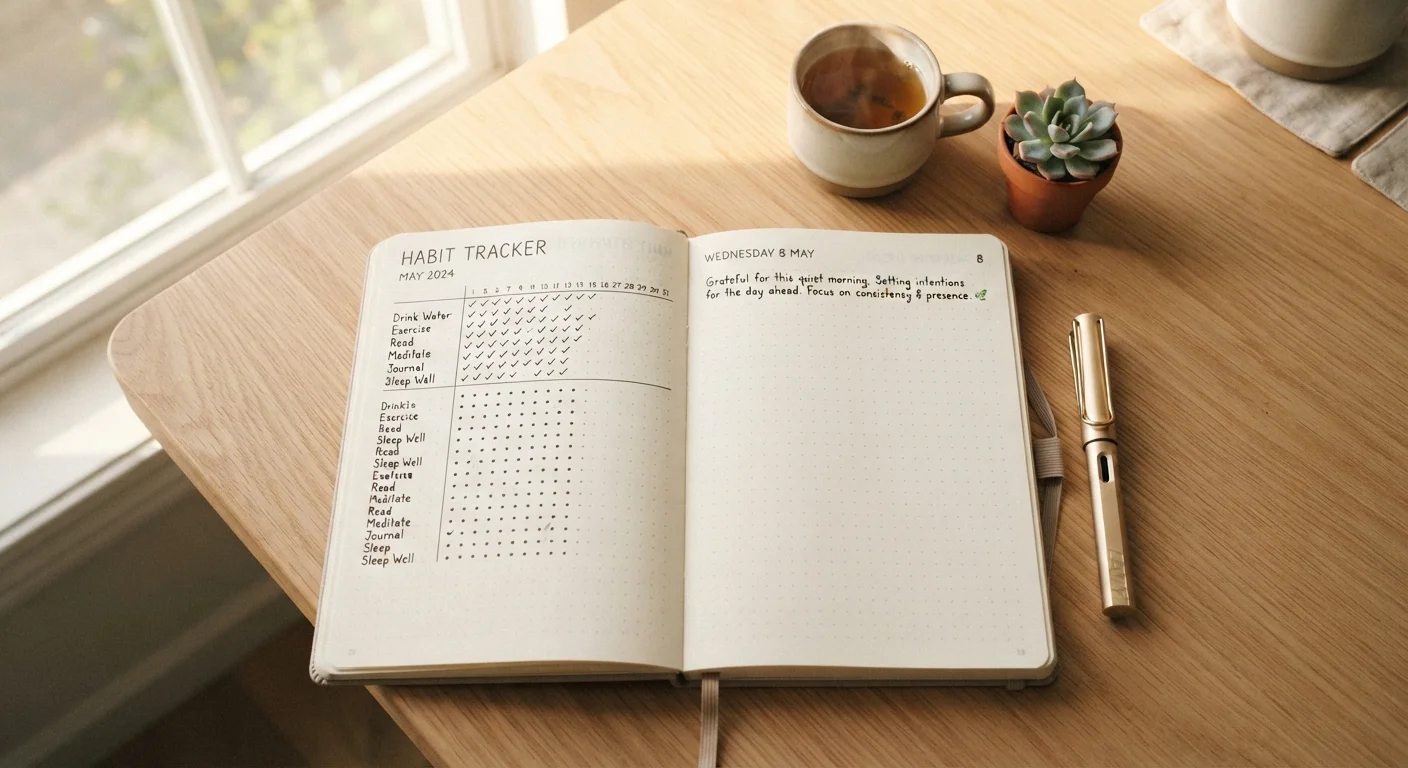
Photo: faqsvault.com editorial
Key Takeaways
- Missing a single day rarely derails a habit — how you respond to the miss matters far more.
- All-or-nothing thinking is one of the biggest reasons habit streaks collapse permanently.
- Recovery works best when you lower the bar temporarily rather than abandoning the habit entirely.
- Sustainable habits are built on identity and flexibility, not perfect numeric streaks.
- Understanding why a streak broke helps you redesign the habit to be more resilient.
Why Streaks Feel So Fragile
There's something deeply satisfying about a habit streak. Whether it's tracked in an app, marked on a calendar, or simply held in your head, that growing chain of consistent days feels like real momentum. And then one day — a late meeting, an unexpected illness, a night of poor sleep — the chain breaks.
What happens next is the part that matters most, and it's where most people stumble. The streak itself isn't the habit. It's a measurement of the habit. Confusing the two is at the root of many failed attempts at lasting change.
The good news is that habit science consistently shows a single missed day has negligible effect on long-term behavior patterns — provided you don't interpret that miss as an invitation to quit. Recovery is almost always possible, and it rarely requires starting over from scratch. It requires understanding what went wrong and adjusting thoughtfully.
Treating one missed day as complete failure and abandoning the habit altogether.
Setting a habit target that is too ambitious for everyday life from the start.
Restarting the streak counter at zero and attempting the full habit immediately after a break.
Relying entirely on motivation and willpower rather than building environmental supports.
Ignoring the underlying reason the streak broke in the first place.
What Sustainable Recovery Actually Looks Like
Coming back from a broken streak doesn't need to be dramatic. In fact, the quieter and more matter-of-fact your return, the better. Sustainable recovery tends to follow a simple pattern: acknowledge, reduce, re-engage.
Acknowledge that a miss happened without judgment. Shame and self-criticism are poor motivators for long-term behavior — they generate short bursts of effort followed by withdrawal. A neutral, curious attitude toward the lapse keeps you in a problem-solving frame of mind.
Reduce the habit temporarily. This isn't weakness — it's strategy. If you were meditating for 15 minutes daily and missed a week, returning with a 5-minute session for a few days rebuilds the neural association between the cue and the behavior without overwhelming you. If you're looking to weave habits into a genuinely packed schedule, starting small is the real foundation.
Re-engage with your identity, not just your goal. People who identify as 'someone who exercises' or 'a person who reads before bed' are more likely to return after a lapse than those focused purely on outcomes. The streak is one tool; your sense of self is a more durable one.
If your habit lives inside a morning routine, it's also worth revisiting the structure of that routine — a morning routine that accounts for variability is far easier to recover than a rigid sequence that falls apart when one element is disrupted.
This article is for informational purposes only and does not constitute medical, psychological, or professional advice. If you are experiencing significant challenges with mental health, motivation, or wellbeing, please consider speaking with a qualified healthcare professional.
All published content on this website is for informational and educational purposes only and should not be taken as professional advice. We recommend that readers seek expert opinion before making any decisions. The website is not responsible for any actions taken based on the information provided on this website. We are not liable for any inaccuracies, modifications, or omissions in information. Moreover, external links or third-party content are provided for convenience; we are not liable for their correctness. Users are advised to verify every piece of information before they use it for any purpose.