
Soil pH and Why Your Plants Are Struggling

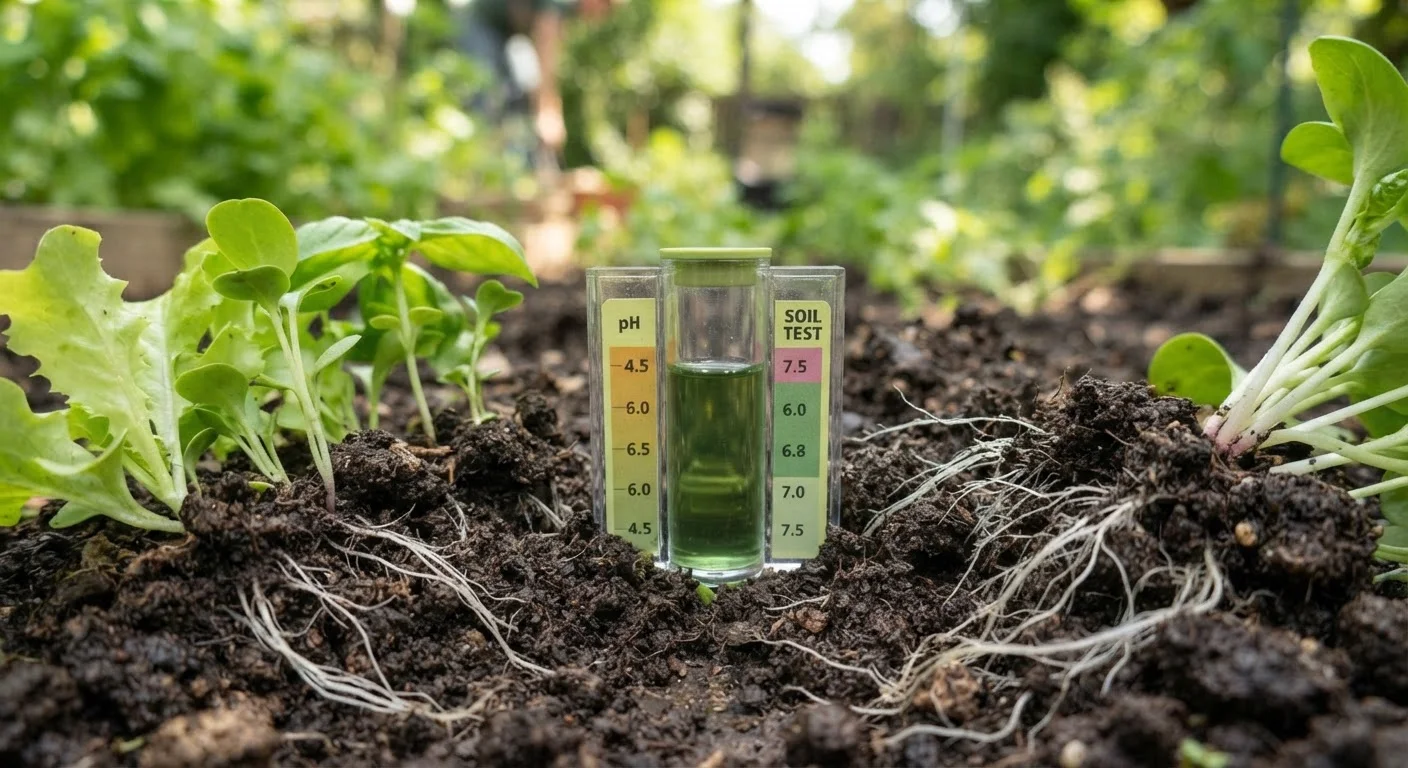
Photo: faqsvault.com editorial
Key Takeaways
- Soil pH controls whether plants can absorb nutrients, not just whether nutrients exist.
- Most vegetables and ornamentals thrive between pH 6.0 and 7.0.
- Simple home test kits can give you a reliable soil pH reading in minutes.
- Adding lime raises pH; adding sulfur or acidifying amendments lowers it.
- pH changes take time — expect gradual improvement over one or more growing seasons.
- Testing soil before planting or amending saves money and prevents avoidable plant loss.
Why Soil pH Matters More Than You Might Think
Many gardeners focus on fertilizer, watering schedules, and sunlight when diagnosing struggling plants — and those factors absolutely matter. But soil pH is often the silent variable that determines whether all that effort actually pays off.
Think of pH as a gatekeeper. It controls the chemical environment around your plant roots, and that environment determines whether nutrients dissolved in the soil water can actually pass through root membranes and into the plant. A soil that tests deficient in iron may actually contain plenty of iron — it's just locked in a chemical form the plant can't use because the pH is too high. No amount of iron fertilizer will solve that problem long-term without addressing the pH first.
This is why understanding soil pH is one of the highest-value things a home gardener can learn. It explains yellowing leaves, stunted growth, poor flowering, and repeated planting failures that might otherwise seem random or mysterious.
6.0–7.0
Optimal pH range for most garden plants
According to soil science principles widely referenced by university extension programs across the United States.
13
Essential nutrients affected by soil pH
Soil scientists identify pH as influencing the availability of nearly all 13 mineral nutrients plants require for healthy growth.
~50%
US soils tested with pH imbalance
Cooperative extension soil testing programs routinely find that a large share of submitted home garden samples fall outside the ideal range for intended crops.
Reading the pH Scale: Acidic, Neutral, and Alkaline
The pH scale runs from 0 (extremely acidic) to 14 (extremely alkaline), with 7.0 as the neutral midpoint. In practical gardening terms, the range you'll encounter is typically between about 4.5 and 8.5. Most cultivated plants prefer a relatively narrow window within that range.
- pH 6.0–7.0 (slightly acidic to neutral): The sweet spot for most vegetables, annuals, and lawn grasses. Nutrient availability peaks here.
- pH 4.5–6.0 (acidic): Preferred by acid-loving plants such as blueberries, azaleas, rhododendrons, and camellias. In this range, iron and manganese become more available, but phosphorus becomes less so.
- pH above 7.5 (alkaline): Common in arid Western states and areas with limestone-heavy bedrock. Iron, manganese, and zinc become increasingly unavailable, causing chlorosis (yellowing) even in otherwise healthy-looking soil.
Soil pH also affects soil biology. Beneficial bacteria that break down organic matter and cycle nutrients tend to thrive near neutral pH, while fungal communities tolerate slightly more acidic conditions. Getting your pH in range supports the entire soil ecosystem, not just chemistry.
How to Test Your Soil pH
Testing is straightforward and doesn't require any special expertise. There are two practical options for home gardeners:
- Home test kits: Inexpensive liquid test kits and paper strips are available at most garden centers. They're quick and good for a general snapshot. Collect soil from several spots in your garden — take small amounts from a few inches below the surface — and mix them together before testing to get a representative reading.
- Digital pH meters: A probe-style meter gives a fast reading directly in moist soil. Quality varies, so calibrate your meter regularly according to manufacturer instructions and test in soil that isn't bone dry.
- Lab testing through a cooperative extension service: Many US states offer low-cost soil testing through university extension programs. This is the most accurate method and often includes recommendations for specific amendments based on your results. It's worth doing at least once, especially in a new garden.
Test in early spring before planting or in fall after harvest. Avoid testing immediately after fertilizing or liming, as results can be temporarily skewed.
What to Do When Your pH Is Off
Once you know your pH, correcting it is manageable — just not instant. Soil chemistry changes gradually, and significant shifts may take more than one growing season to achieve.
Raising pH (making soil less acidic)
Ground limestone — either calcitic or dolomitic lime — is the standard approach. Dolomitic lime also adds magnesium, which can be useful if your soil is magnesium-deficient. Work it into the top several inches of soil and water it in. Retest after four to six weeks. The amount of lime needed depends on your soil's texture: clay soils require more amendment than sandy soils to shift the same number of pH points.
Lowering pH (making soil less alkaline)
Elemental sulfur works well but acts slowly — soil bacteria must convert it over weeks to months. Incorporating organic matter like well-composted pine bark or sphagnum peat moss can also provide modest acidification over time. Highly alkaline soils, particularly those caused by underlying limestone geology, can be among the most challenging to correct. In those cases, choosing naturally alkaline-tolerant plants or growing in raised beds with amended soil may be a more practical long-term solution.
Test Before You Amend
Matching Plants to Your Soil's Natural pH
Sometimes the most sustainable approach isn't to fight your soil's natural pH, but to work with it. If your garden naturally trends acidic, leaning into blueberries, ferns, and rhododendrons can be more rewarding than constantly amending to grow tomatoes. If your soil is alkaline, lavender, sage, and many ornamental grasses are well-adapted choices.
Before starting a new garden bed, take a soil sample and test the pH. It takes only a few minutes and sets realistic expectations for what will and won't thrive. Many experienced gardeners treat pH testing as a routine, low-cost habit — the kind of small step that prevents larger, frustrating problems down the road.
Understanding what your soil is actually doing at the chemical level transforms how you garden. Instead of guessing why plants aren't performing, you'll have a clear, actionable place to start.
Frequently Asked Questions
All published content on this website is for informational and educational purposes only and should not be taken as professional advice. We recommend that readers seek expert opinion before making any decisions. The website is not responsible for any actions taken based on the information provided on this website. We are not liable for any inaccuracies, modifications, or omissions in information. Moreover, external links or third-party content are provided for convenience; we are not liable for their correctness. Users are advised to verify every piece of information before they use it for any purpose.