
How Sampling Works — and Why It's More Complicated Than It Sounds

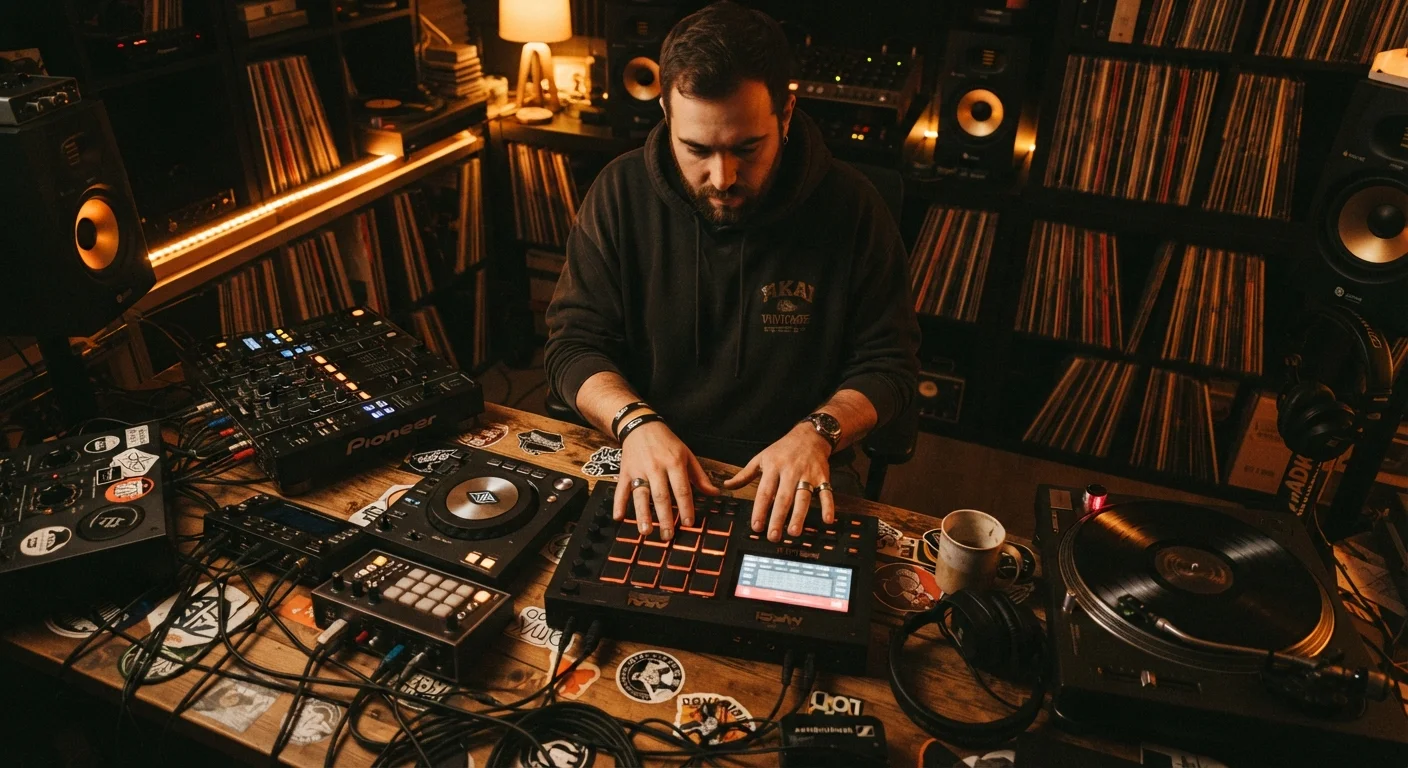
Photo: faqsvault.com editorial
Key Takeaways
- Sampling is central to hip-hop, electronic, and pop music production worldwide.
- Using a sample without clearance can lead to serious legal and financial consequences.
- Producers often need two separate licenses: one for the master recording and one for the underlying composition.
- Many artists deliberately obscure their samples through chopping, reversing, or heavy processing.
- Sampling has sparked landmark copyright cases that continue to shape music law today.
Where Sampling Came From
Long before the term entered mainstream conversation, musicians were borrowing sounds from each other. But sampling as a technological practice took off in the late 1970s and early 1980s alongside affordable digital hardware — devices like the E-mu SP-1200 and the Akai MPC60, which let producers record snippets of vinyl and trigger them on demand.
Hip-hop producers in New York were among the first to build an entire aesthetic around the technique. Figures associated with the golden era of late-1980s hip-hop treated crate-digging — hunting for obscure funk, soul, and jazz records — as both craft and art form. A four-bar drum break from a 1969 funk record could become the backbone of a track heard by millions. The practice spread quickly into electronic dance music, trip-hop, and eventually mainstream pop.
If you're still building your music vocabulary, our guide to music terminology covers related concepts like BPM and timbre that help put sampling into broader context.
The Creative Mechanics: How Producers Actually Do It
Sampling is far more than pressing play on someone else's record. Skilled producers transform their source material beyond recognition through a toolkit of techniques:
- Chopping: Slicing a longer loop into individual hits — a snare here, a horn stab there — and rearranging them into a new rhythm or melody.
- Pitch-shifting: Raising or lowering the original recording's pitch to fit a new key or chord progression.
- Time-stretching: Slowing down or speeding up audio without changing its pitch, letting a 1970s funk groove sit inside a modern trap beat.
- Layering: Stacking multiple samples — perhaps a bass from one record and a snare from another — to build a composite sound.
- Reversing: Playing audio backwards to create textural, atmospheric effects nearly unrecognizable from the source.
The goal is often to make the source unidentifiable, either for aesthetic reasons or to reduce legal exposure — though, as courts have made clear, heavy processing alone does not automatically create a legal safe harbor.
2 sec
Minimum sample length triggering copyright liability
The 2004 Bridgeport ruling established that even a two-second guitar sample required licensing, removing any de minimis threshold in that circuit.
$4M+
Settlement in major sampling copyright dispute
Several high-profile sampling cases have resulted in multimillion-dollar settlements, underscoring the financial stakes of using uncleared recordings.
1991
Year landmark sampling copyright ruling was issued
Grand Upright Music Ltd. v. Warner Bros. Records Inc. (1991) was among the first major rulings to establish that unauthorized sampling constitutes infringement.
The Legal Maze: Clearances, Licenses, and Landmark Cases
Here's where sampling gets genuinely complicated. When a producer samples a commercial recording, they're typically dealing with two separate copyrights: the master recording (usually owned by a label or distributor) and the underlying composition (owned by the songwriter or their publisher). Clearing both can be expensive, time-consuming, and not guaranteed — rights holders can simply say no.
Several court decisions reshaped how the industry thinks about this. The 1991 case Grand Upright Music Ltd. v. Warner Bros. Records Inc. — triggered by an uncleared Biz Markie album — established that sampling without permission constitutes copyright infringement. A 2004 Sixth Circuit ruling in Bridgeport Music, Inc. v. Dimension Films went further, holding that even a two-second guitar sample required clearance, coining the now-famous phrase: "Get a license or do not sample."
More recently, a 2016 ruling involving the Beastie Boys pulled back slightly, suggesting that transformative use and the totality of circumstances still matter. But the overall lesson for artists and producers remains: assume you need clearance.
Thinking About Sampling? Start With Clearance Early
Why Sampling Still Thrives Despite the Complications
Given the legal complexity, why does sampling remain so prevalent? Several reasons keep it alive and central to modern music-making.
First, the creative payoff is enormous. A well-chosen sample carries emotional weight, nostalgia, and cultural meaning that's nearly impossible to manufacture from scratch. When producers flip a classic soul record, they're inviting listeners into a conversation across decades.
Second, the industry has built workarounds. Interpolation — re-recording a melody rather than lifting the original audio — sidesteps master clearance entirely. Sample-clearance specialists and music attorneys have also made the process more navigable for artists with resources. And royalty-free sample libraries have grown dramatically, giving independent producers a legal path to compelling sounds.
Third, hip-hop's commercial dominance has given sampling cultural legitimacy. Major labels now have dedicated clearance departments, and some rights holders actively court sample requests as a revenue stream. What was once an underground workaround is now a formalized — if still complicated — part of the music business.
Sampling, at its best, is musical dialogue stretched across time: a producer in 2024 responding to a drummer from 1971, with generations of listeners discovering both in the process.
Frequently Asked Questions
All published content on this website is for informational and educational purposes only and should not be taken as professional advice. We recommend that readers seek expert opinion before making any decisions. The website is not responsible for any actions taken based on the information provided on this website. We are not liable for any inaccuracies, modifications, or omissions in information. Moreover, external links or third-party content are provided for convenience; we are not liable for their correctness. Users are advised to verify every piece of information before they use it for any purpose.