
The Unreliable Narrator: A Film Device That's Far Older Than You Think

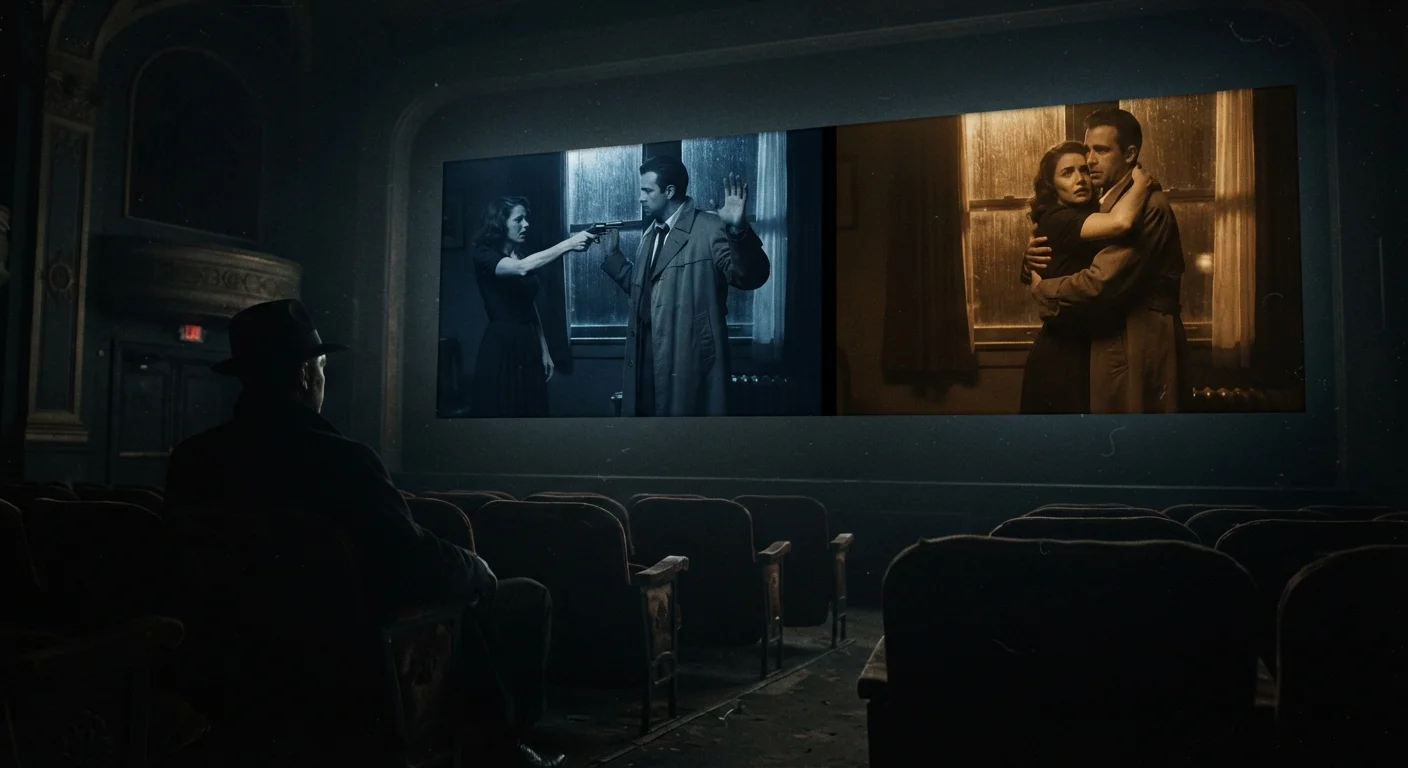
Photo: faqsvault.com editorial
Key Takeaways
- Unreliable narrators make audiences active participants rather than passive viewers.
- The device appears in silent cinema and predates modern psychological thrillers by decades.
- Unreliability can stem from deception, mental state, limited perspective, or self-interest.
- The technique is equally effective in voiceover-driven films and purely visual storytelling.
- Some of cinema's most celebrated twists are built entirely on this single narrative device.
A Device as Old as Cinema Itself
When audiences talk about unreliable narrators today, they usually summon up prestige thrillers and streaming-era mind-benders. But the device has been quietly operating since the earliest days of filmmaking — long before the term had a name.
Silent-era films regularly experimented with subjective perspective, showing audiences events through a character's distorted mental state. German Expressionist cinema of the 1920s, with its twisted architecture and nightmare logic, was practically built on the idea that the camera could lie on behalf of its protagonist. What we see is not necessarily what happened — it's what someone experienced.
The concept gained its formal vocabulary in literary criticism, but its cinematic roots run just as deep. Understanding where the device comes from helps explain why it remains so durably compelling across every decade of film history.
Why It Works: The Psychology of Misdirection
There's a reason the unreliable narrator produces such a visceral reaction in audiences: it exploits the fundamental trust we place in storytellers. We enter a film primed to accept its version of reality. When that contract is broken — or revealed to have been a trap all along — the emotional jolt is enormous.
This works because cinema is an inherently subjective medium. The camera always chooses what to show and what to withhold. An unreliable narrator simply makes that selectivity meaningful within the story itself. Filmmakers use lighting cues, score shifts, and careful editing to seed doubt without tipping their hand too early.
“The camera lies all the time. It lies twenty-four times a second. The art is in knowing how to use that lie to tell a deeper truth.”
— Brian De Palma, Film director known for subjective-camera techniques
There's also a pleasurable cognitive dimension. Viewers who catch on early feel rewarded; those who are genuinely surprised on a rewatch experience the film almost as a different movie. Either way, the audience becomes an active participant — piecing together what's real, what's imagined, and what's been deliberately withheld.
Types of Unreliable Narrators in Film
Not all unreliable narrators operate the same way, and recognizing the different varieties helps sharpen your viewing instincts.
- The Deceiver: Consciously misleads the audience. Think of a character whose testimony is revealed to be a fabrication constructed in real time.
- The Self-Deluded: Genuinely believes their own distorted version of events. Their unreliability isn't malicious — it's psychological. This type often appears in films exploring grief, trauma, or identity.
- The Limited Witness: Doesn't have access to the full picture. Their account is incomplete rather than dishonest — they simply don't know what they don't know.
- The Mentally Unstable: A protagonist whose perception of reality is compromised by illness, substance use, or psychological crisis. The audience must decode which scenes are real and which are not.
Many of the most celebrated examples blend these categories, creating layered unreliability that rewards repeat viewing.
Iconic Examples Worth Revisiting
Akira Kurosawa's Rashomon (1950) remains the defining benchmark — four witnesses recount the same event with four incompatible versions, and the film refuses to adjudicate between them. It's a masterclass in structural unreliability that influenced generations of filmmakers.
Decades later, films like Fight Club (1999) and Memento (2000) brought the device into mainstream conversation by encoding unreliability directly into their visual grammar. Memento is especially instructive: its reverse chronology doesn't just illustrate its protagonist's memory disorder — it recreates it for the audience. You experience his confusion firsthand.
More recently, prestige TV and streaming have embraced the device enthusiastically, producing limited series where the entire season-long mystery hinges on whose account of events to believe. The form has expanded well beyond the two-hour film, but the underlying mechanism remains the same.
What to Watch For on Your Next Viewing
Once you know what an unreliable narrator looks like, you start spotting the fingerprints everywhere. A few signals worth tracking:
- Inconsistent details: Does the story contradict itself in small ways? That's rarely accidental.
- Overly convenient memory: A narrator who recalls dialogue perfectly but forgets other key moments may be selectively editing.
- Visual-audio mismatch: When what a character says doesn't quite match what the camera shows, trust the camera over the words.
- Too-perfect victimhood: Characters who present themselves as entirely blameless often have something to hide.
Try Watching the Film Twice
The most satisfying films in this tradition reward patience. They're designed to mean something different the second time through — once you know where the cracks are, you'll see them everywhere from the opening frame.
Frequently Asked Questions
All published content on this website is for informational and educational purposes only and should not be taken as professional advice. We recommend that readers seek expert opinion before making any decisions. The website is not responsible for any actions taken based on the information provided on this website. We are not liable for any inaccuracies, modifications, or omissions in information. Moreover, external links or third-party content are provided for convenience; we are not liable for their correctness. Users are advised to verify every piece of information before they use it for any purpose.